
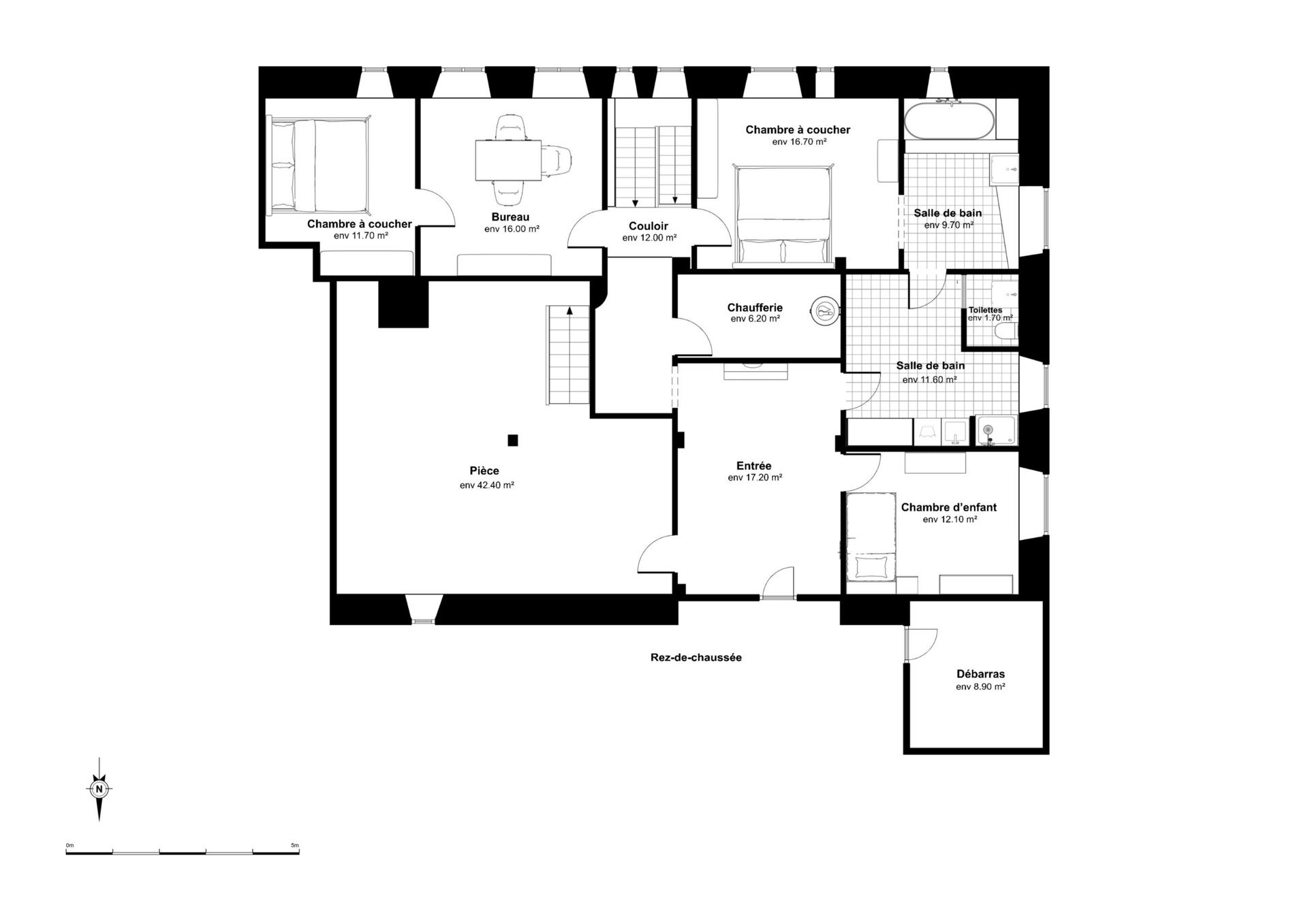
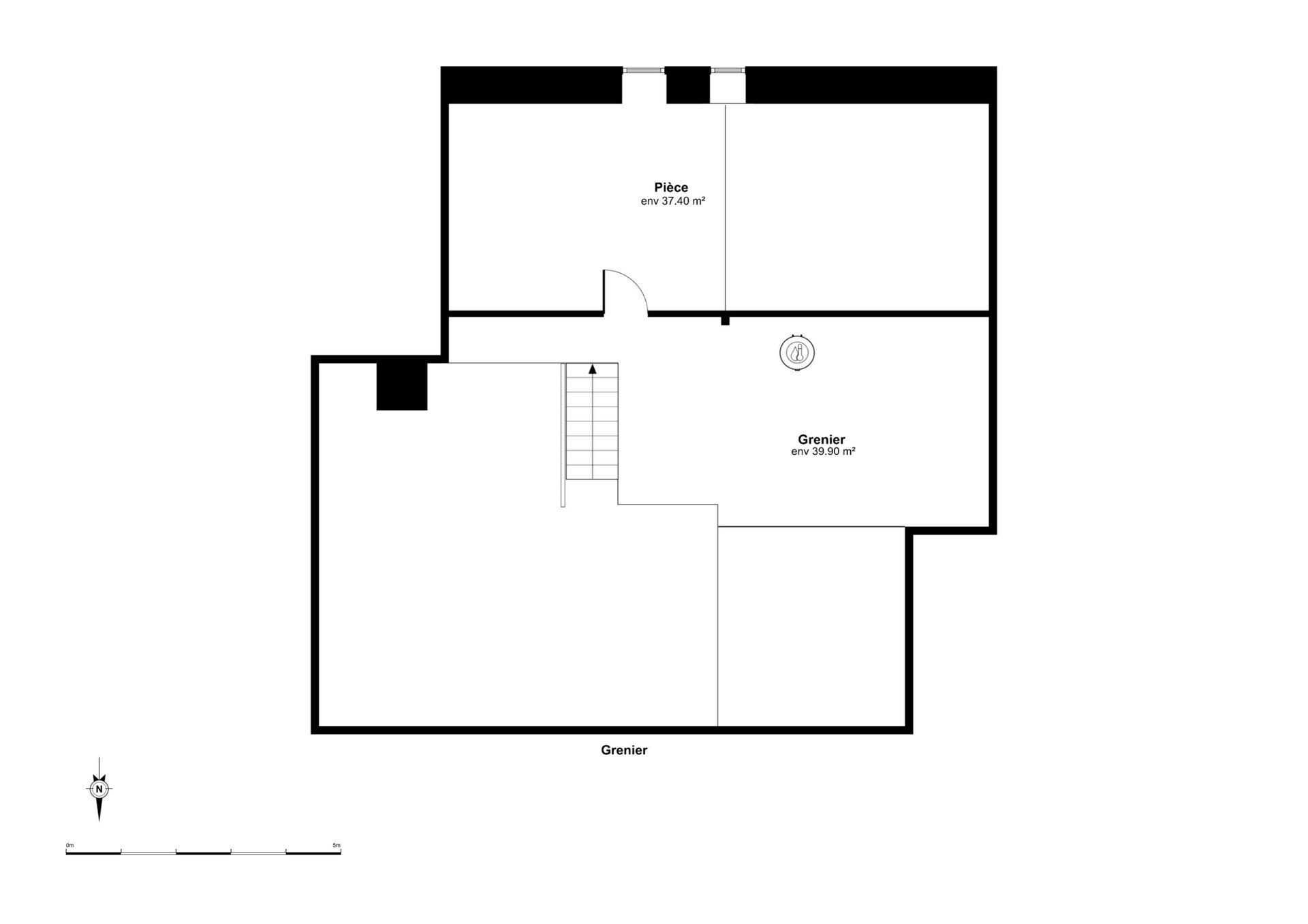
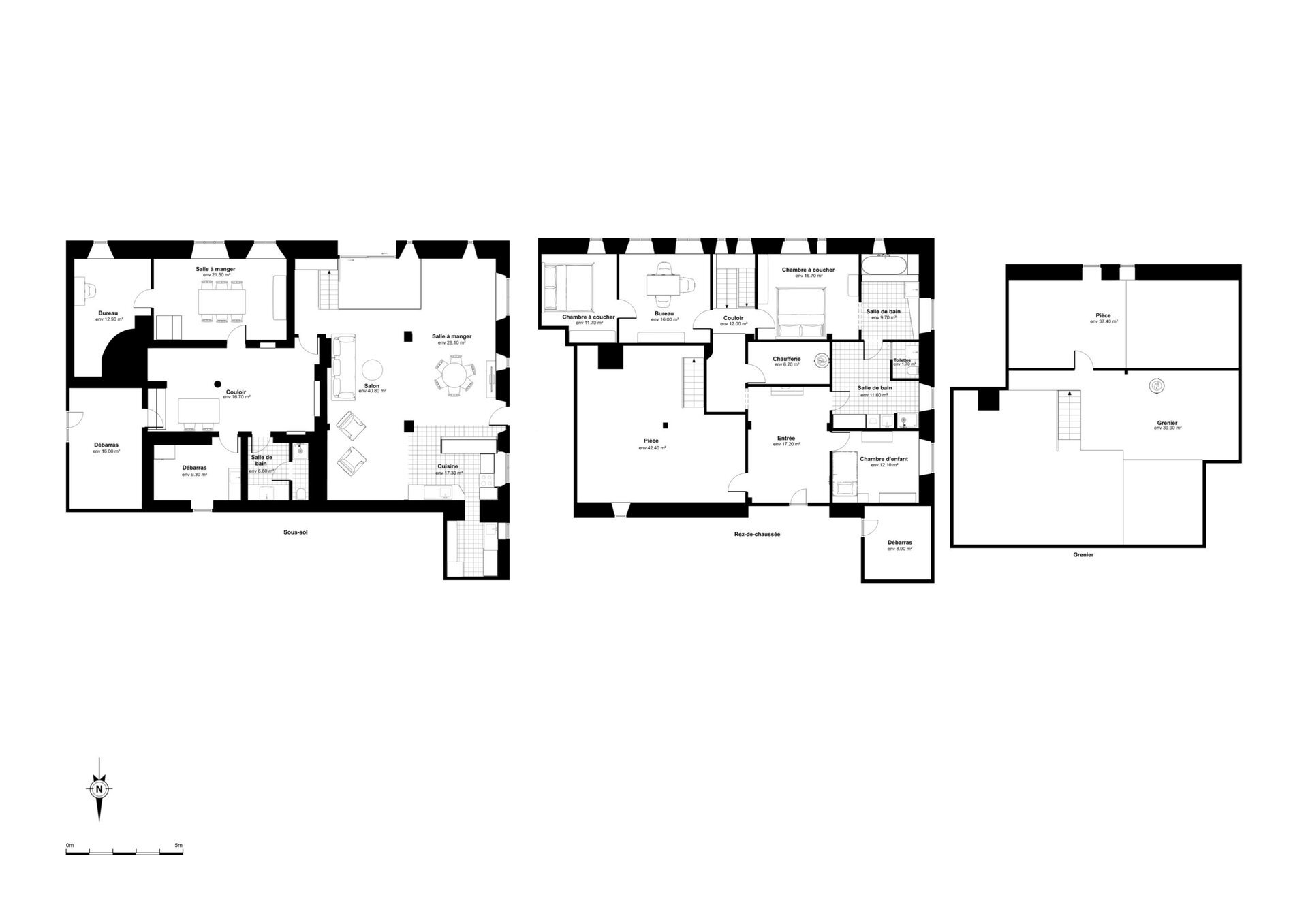
Description
IN 1985, THIS RESTORED OLD FARMHOUSE WON THE NEUCHÂTELOIS HEIMATSCHUTZ PRIZE.
The PAST IN THE PRESENT
When architecture meets the contemporary past, or how to bridge three and a half centuries of history.
Between the original "belle chambre" and the modern living room installed in the former stable, there's just a simple wooden door. And a leap of three hundred and fifty years. But not the slightest shock: just life going on, in the gentle rolling hills of this northern tip of the Val-de-Ruz.
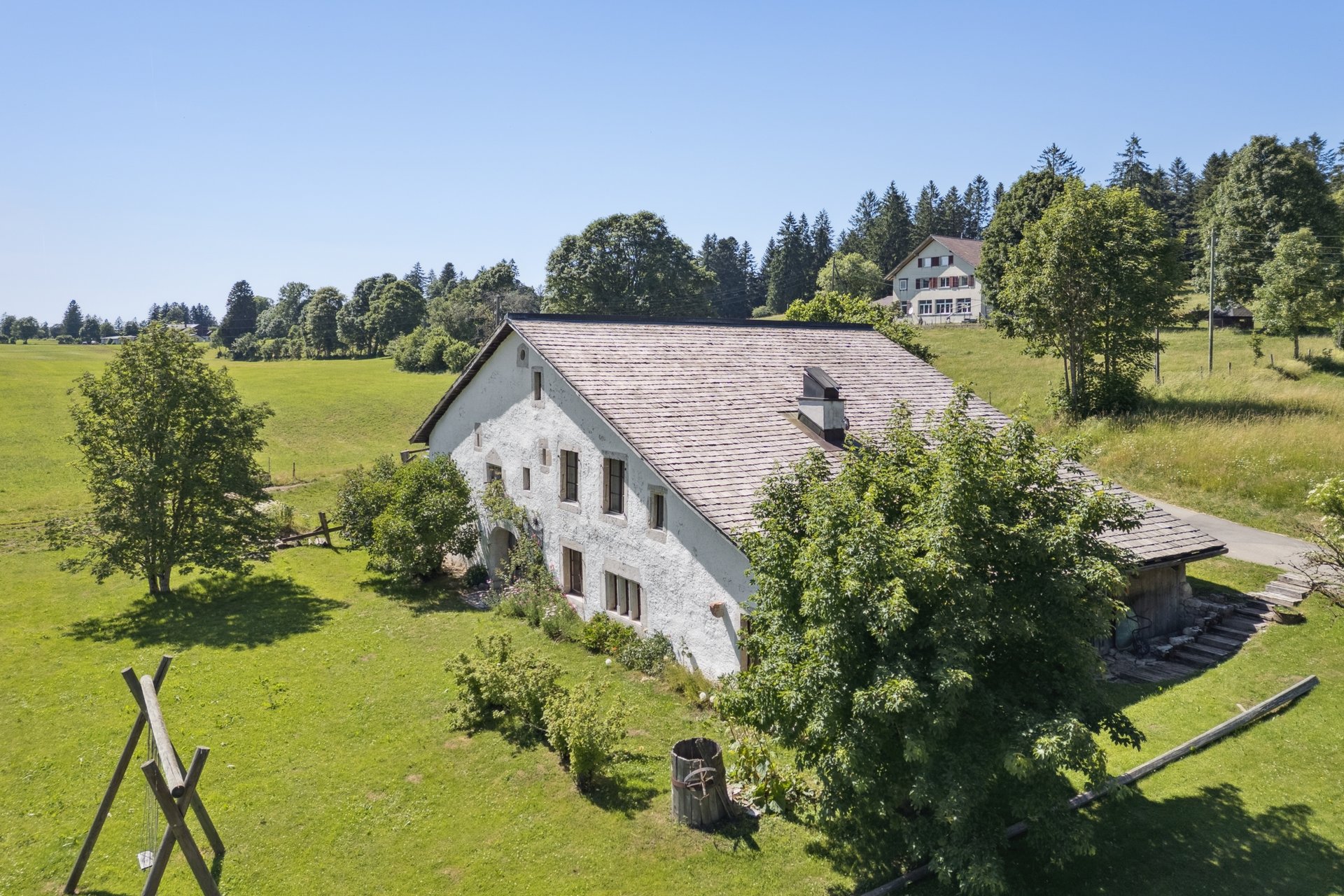
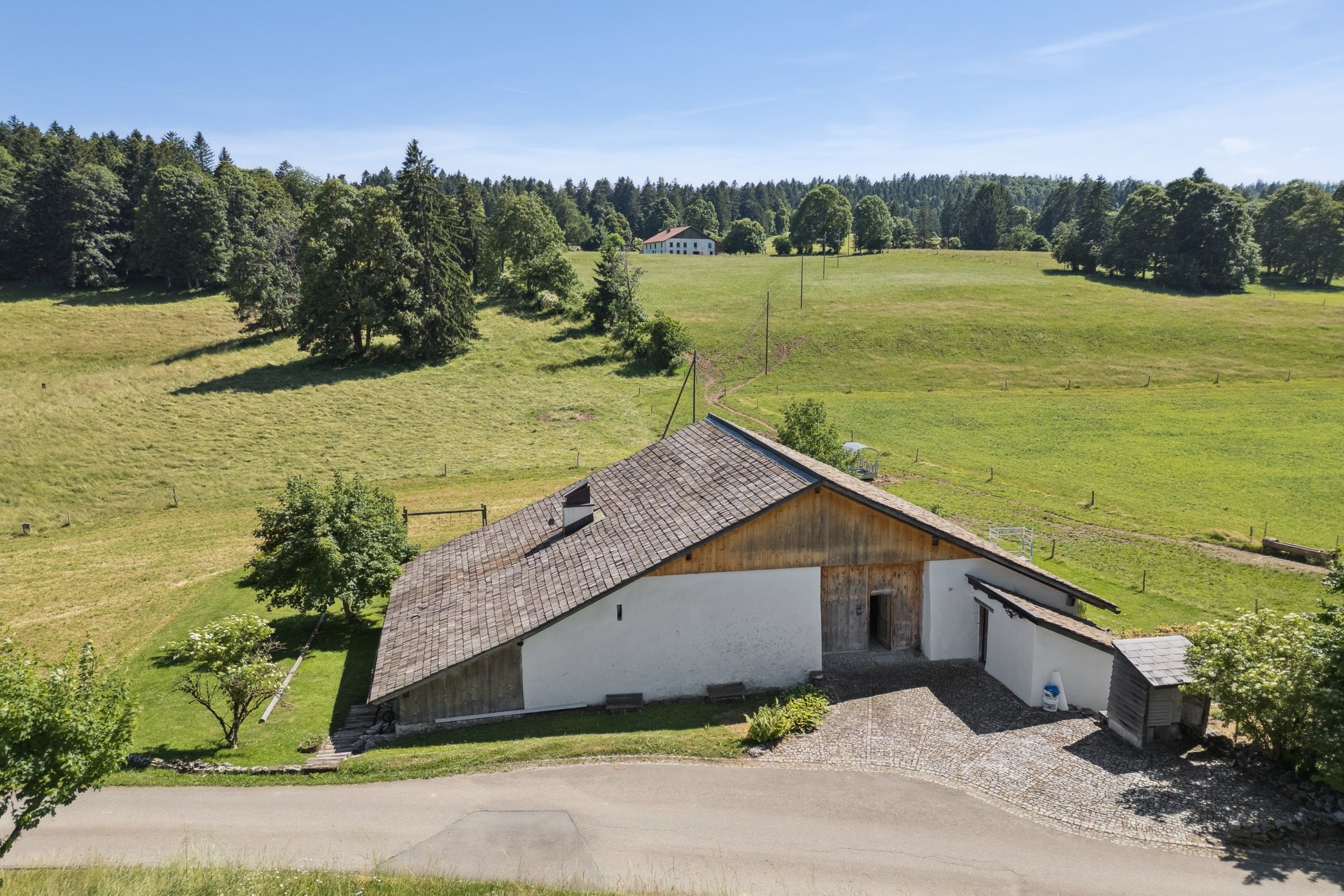
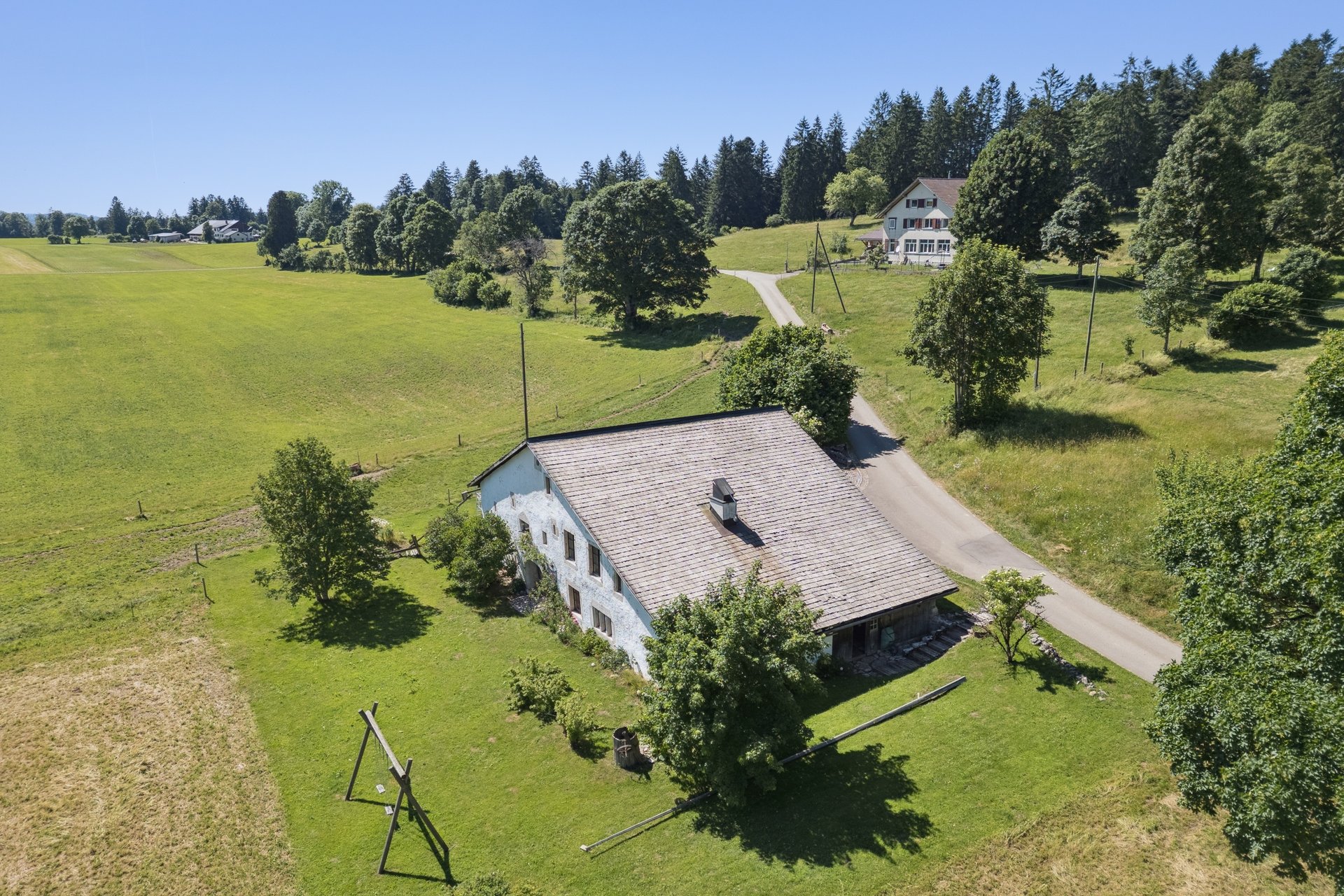
It's a Jura farmhouse, like a few that still remain in the region. Built in 1652, it had belonged throughout the last century to the same family of modest farmers, the Scheideggers. When the father died in the 1960s, the mother and daughter continued to live there as they had in the previous century, with only electricity and water from the cistern. The tiny living quarters consisted of the hearth (the kitchen), the "belle chambre", which was only entered on feast days, and a small room above: the "grandfather's room", accessed through a trapdoor by climbing over the stove. The rest was the empty barn and stable. The house was abandoned in the mid-seventies when, the mother having died, the daughter had to be placed in a home.
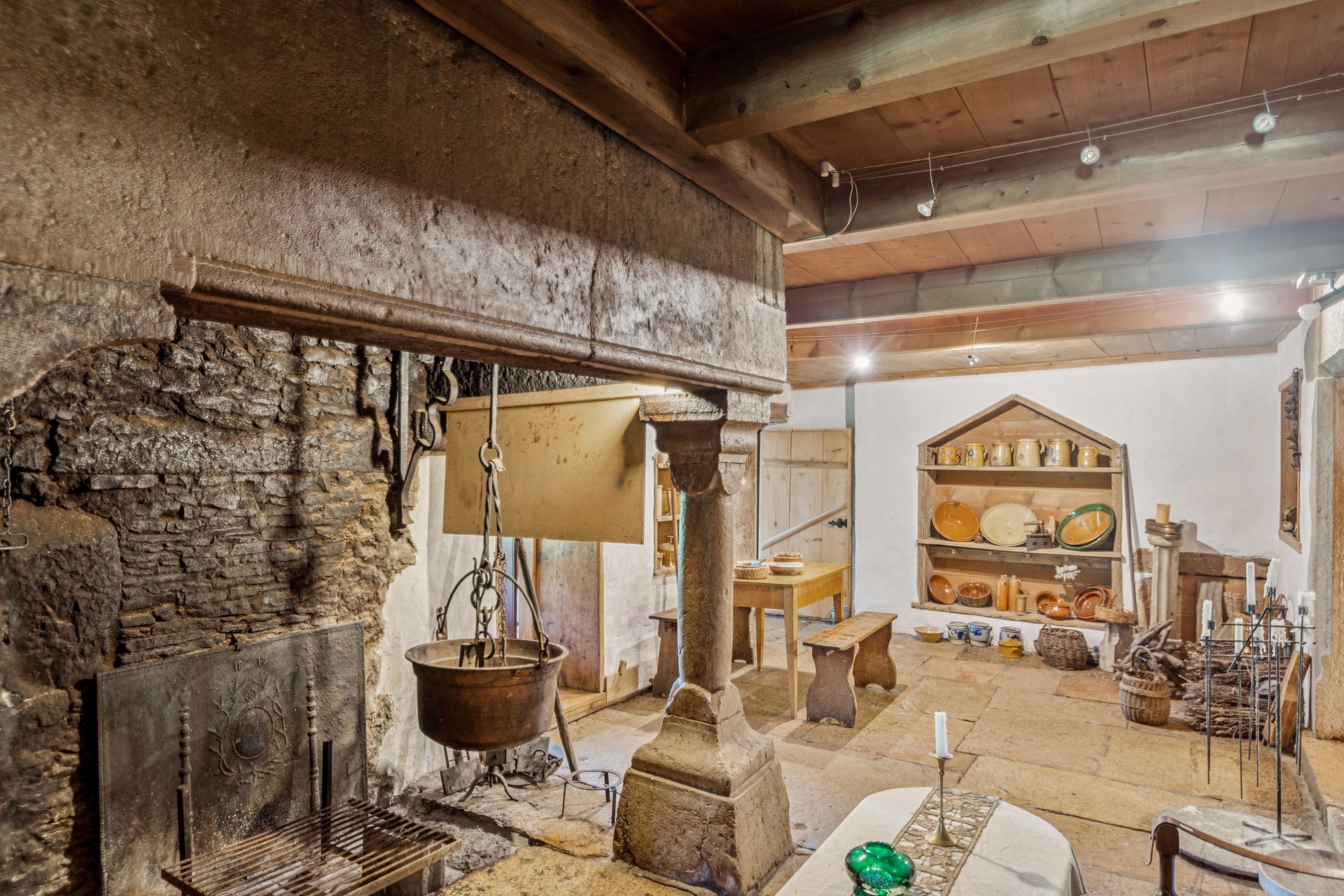
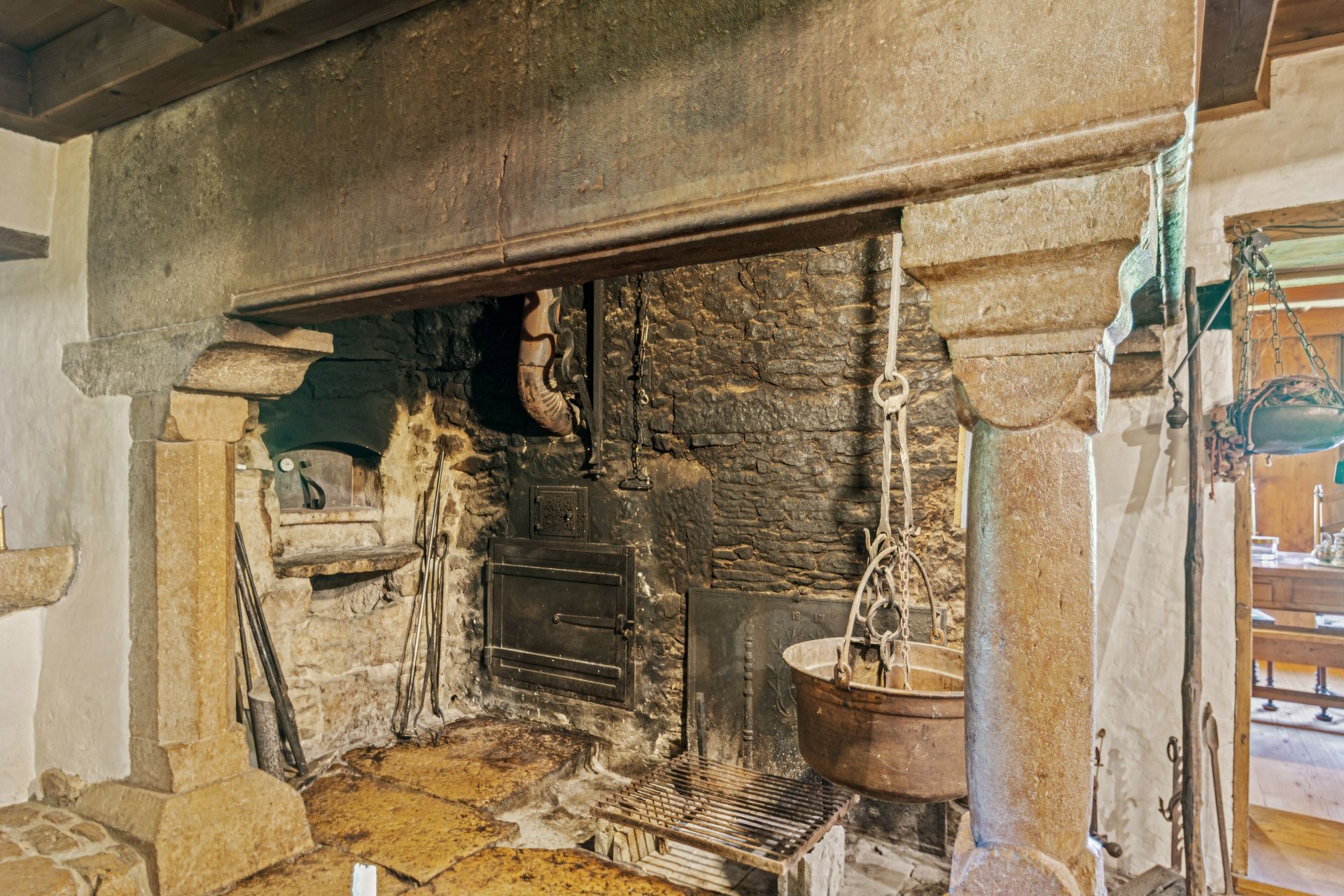
In the ten years that Henri and Paule Schneider had been scouring the region for a farmhouse to restore, they must have come across this ruin ten times: cracked walls, a roof ready to collapse, rotting roof timbers... What prompted them, on that summer's day in 1979, to take a look inside? And there, in what's left of the kitchen, supporting a blackened hearth with a derisory little wood-burning stove, they stopped in front of the column: a marvellous ashlar corner column, carved, intact, as beautiful as the day it was built, supporting a straight-headed fireplace. They bought the column... and the ruin around it. Not without first having to pay off a developer who was planning to build vacation apartments there. Purchase price: 50,000 francs. As a result, the Heimatschutz stepped in and immediately classified the facade. As for the rest... an adventure began for the valiant owners, similar to that recounted by Katharina von Arx in Ma Folie Romainmôtier.
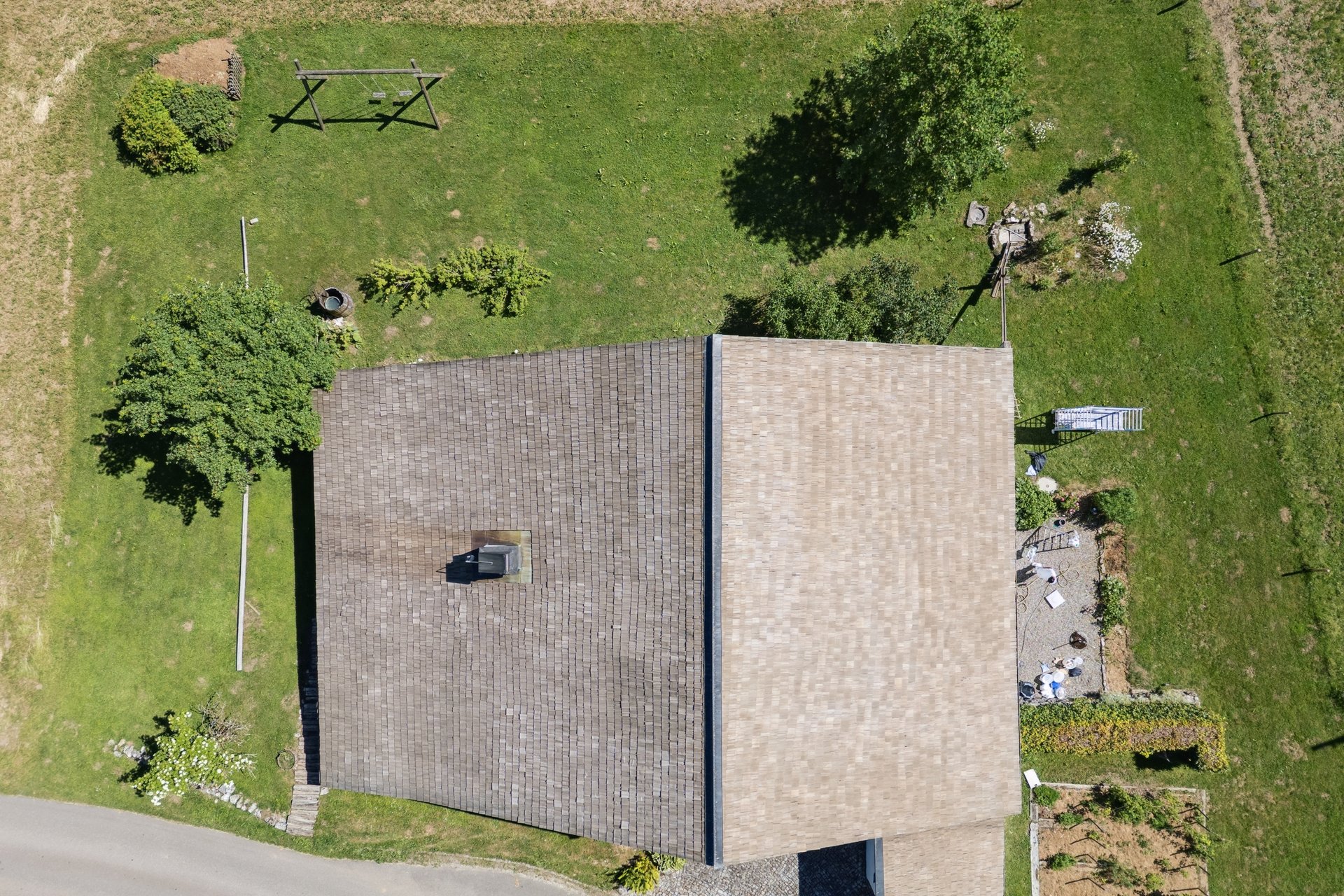
Henri Schneider, an ETS engineer in the watchmaking industry, and his wife Paule - "no training but passions" - went to work with local craftsmen, rediscovering techniques, relearning traditional gestures, transforming themselves, weekend after weekend, into laborers, masons, carpenters, draughtsmen, historians. First objective: the shell. Jean-Louis Geiser, a carpenter from La Ferrière, is creating the new framework, calculated to modern standards but using the techniques of the old building: six columns, rafters made from fir trunks cut on two sides, beams and uprights adjusted and fixed with wooden pegs. The 305 m² of roofing will be covered, as originally, with 66 cm-long wooden shingles, cut from white fir that Henri Schneider went to select in the forest in the company of Denis Sauser, from La Chaux-du-Milieu, one of the last specialists in this art (he won the Heimatschutz Prize in 1981).
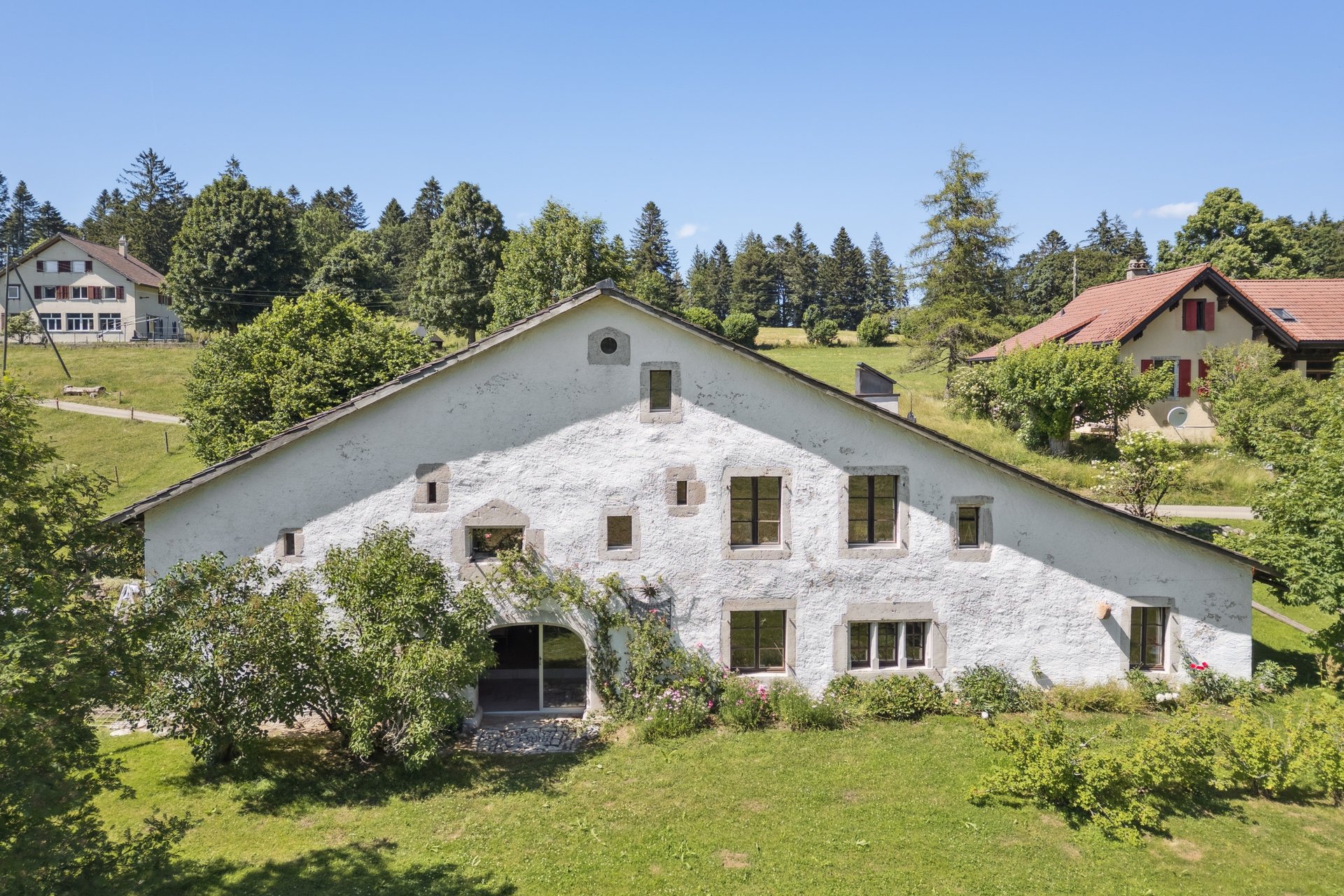
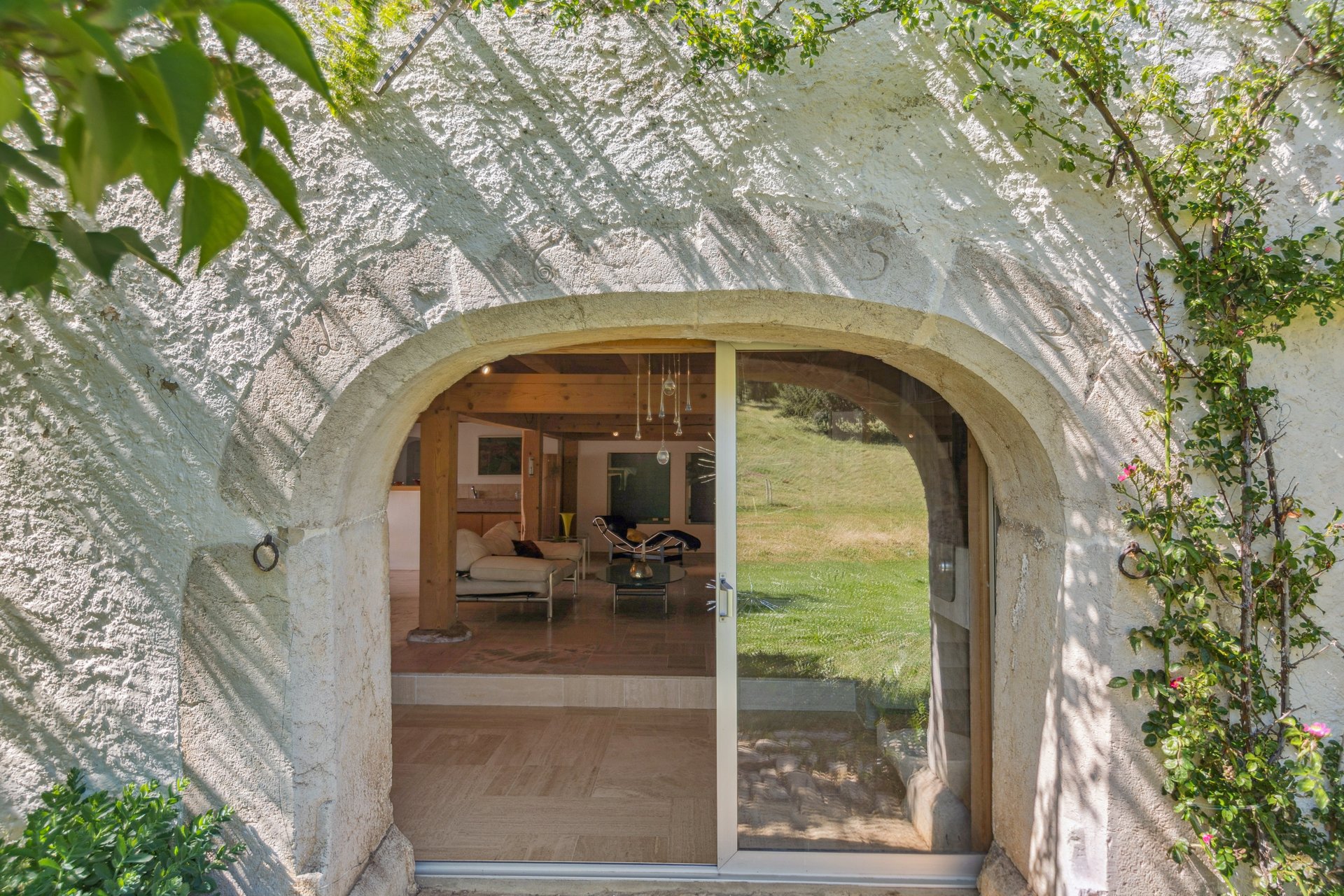
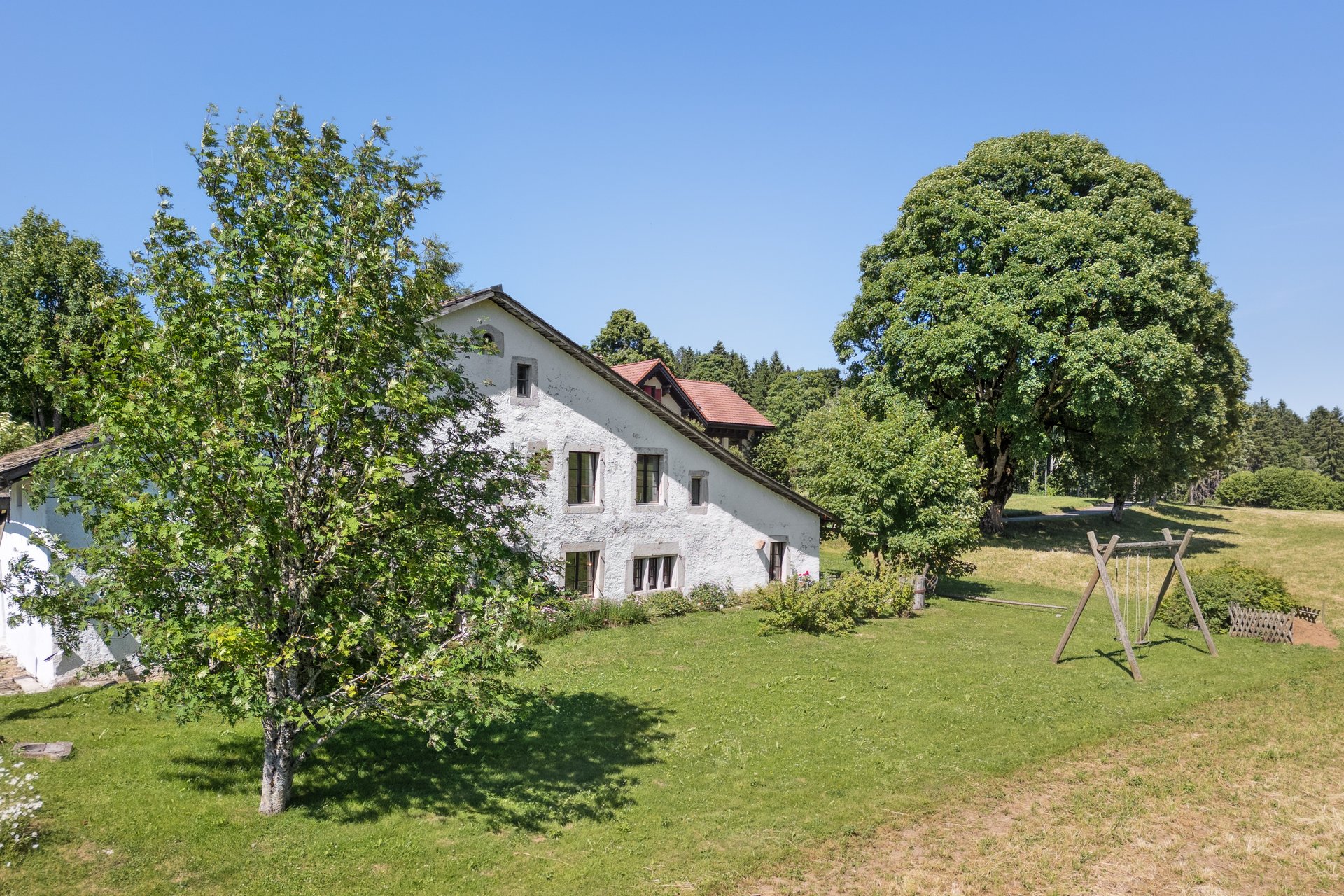
The façade, which proudly displays the date 1652 on the front portal, was in itself an architectural and historical book: the superb mullioned window of the beautiful room, opened in 1673, had been blocked up at a time when taxes were set according to the number of windows surrounded by stone! It will now be restored. On the east side, the awning, the bread oven roof and the construction of the grandfather's bedroom on the second floor date from the 18th century. And the two "modern" windows, too large and poorly framed, above the beautiful bedroom, date from the 19th century. Should the original elements be restored? Keep only the latest modifications? Henri Schneider chose to keep everything, "because history has to be readable. The traces of evolution are the memory of the generations who have lived there and left a bit of their soul behind."
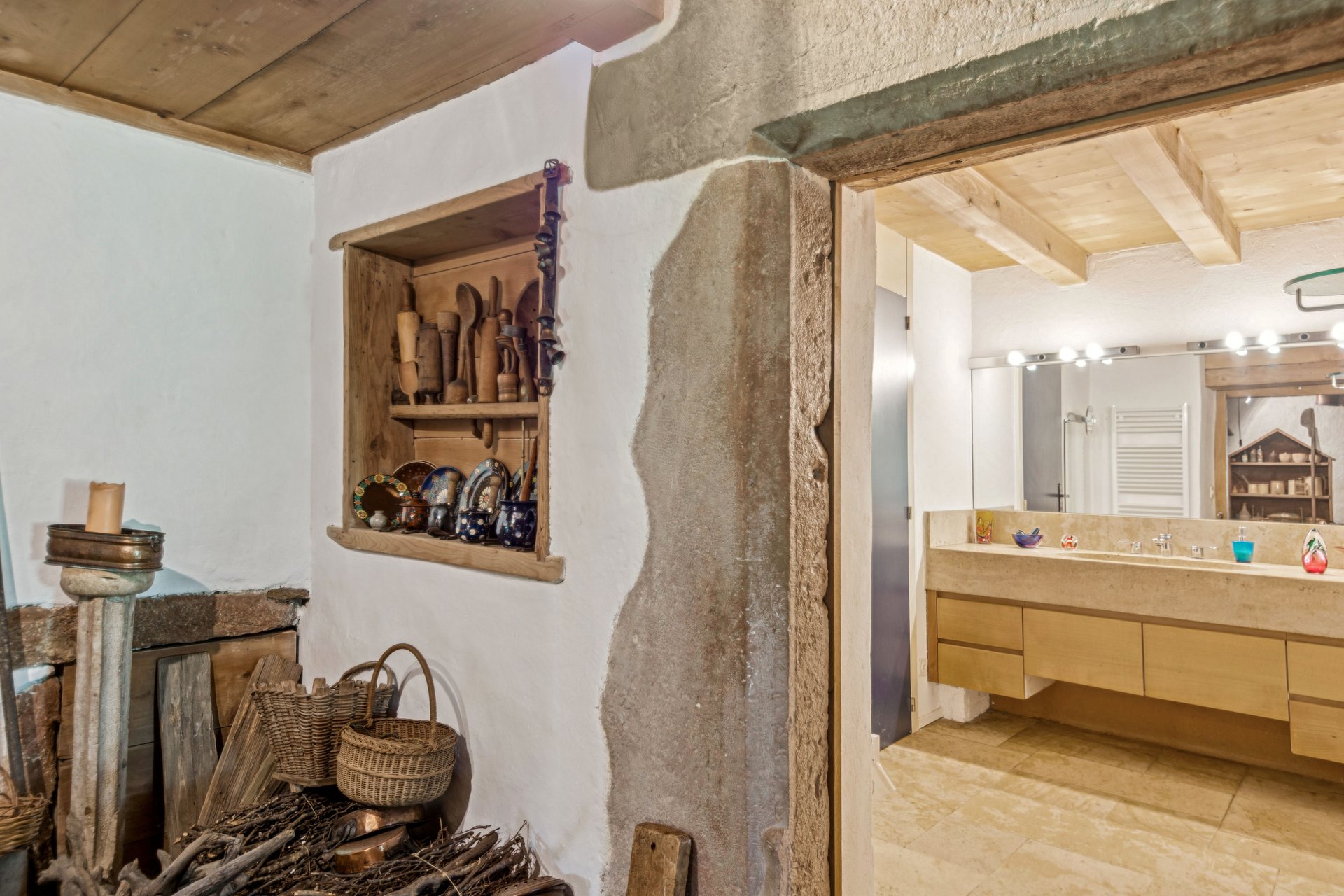
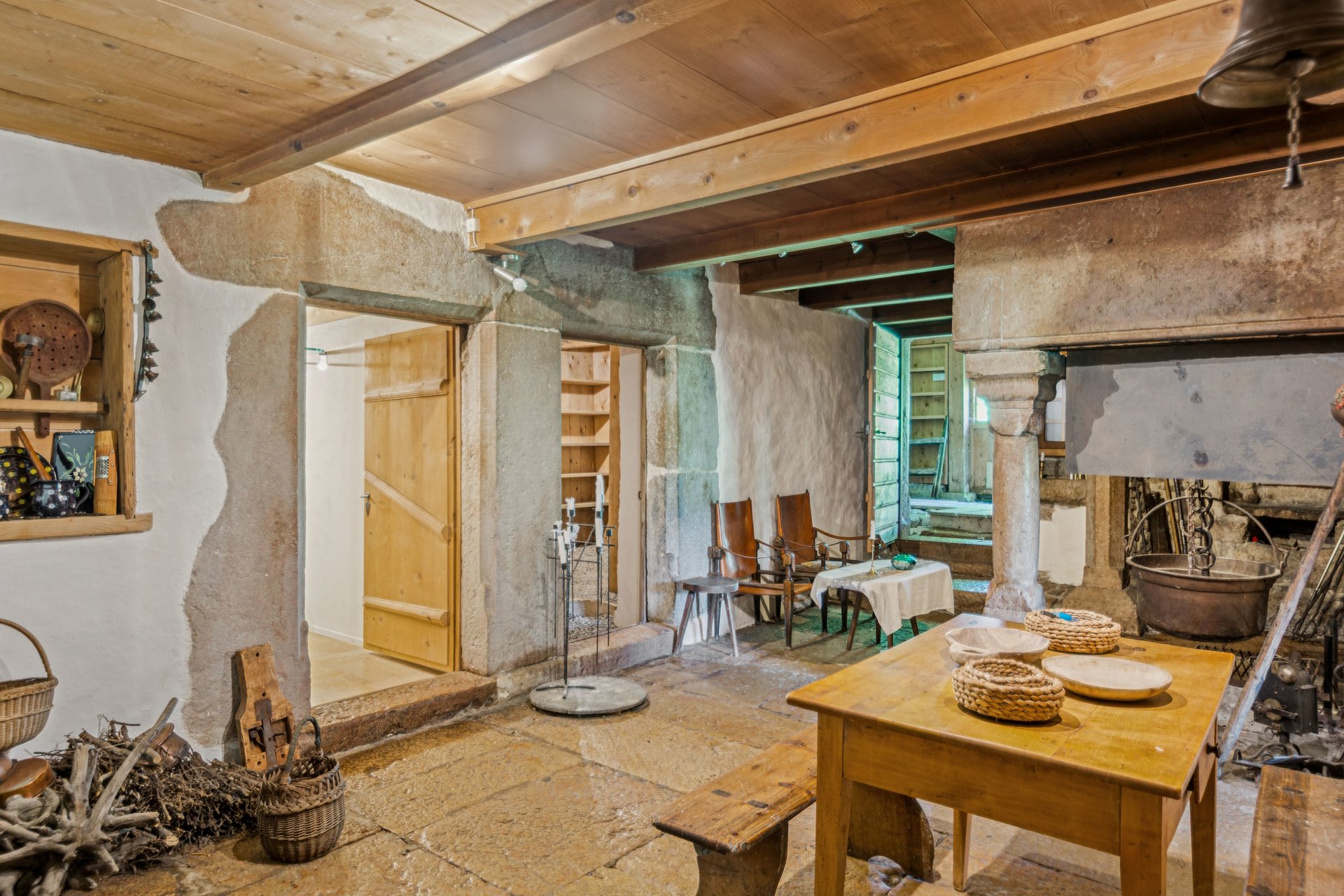
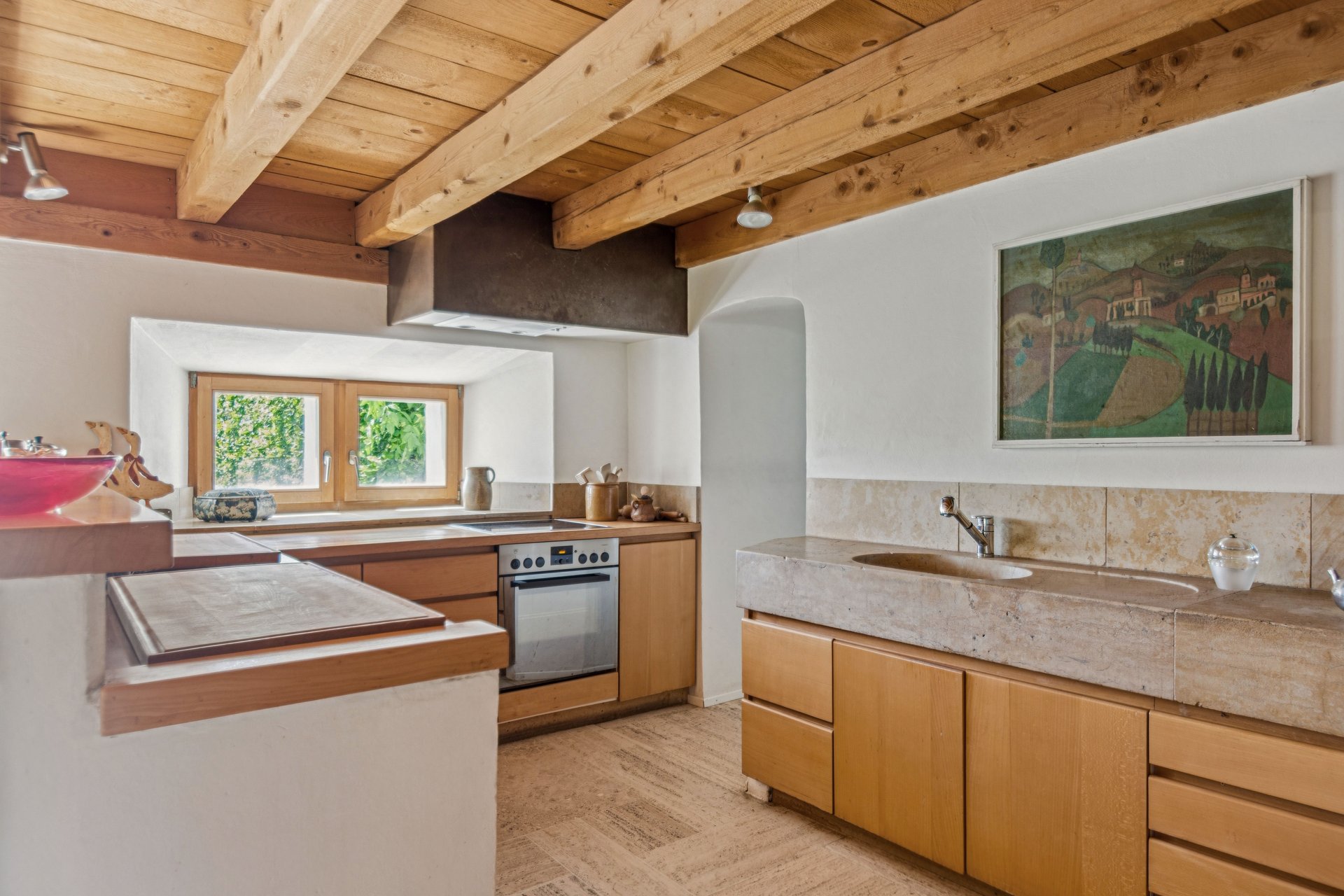
A year later, with the hearth and its precious column dry, Henri Schneider tackled the interior. First the kitchen: the fireplace and its pilaster, the four ashlar-framed doors, the round stone sink, the "laves" floor, the bread oven. And the three "metras", those ancestors of cupboards carved into the wall, open and so beautiful. Then the beautiful bedroom: originally whitewashed, then panelled a century later, as attested by the inscription found on the back of a board ("1799 nous avons fait nous charpentiers..."), it has been completely dismantled and stripped. Also restored to their original state: the bench stove, the trapdoor (once the only access) leading to the grandfather's bedroom, the fireback and its (period) stick used to dry clothes... The only concession to modern comfort: a small bathroom hidden behind a kitchen wall.
At the end of 1984, the entire old part was restored. Too cramped to live in, it became the Sunday "camp" for the whole family... For five years, the Schneiders spent all their weekends and vacations there, cogitating on the layout of the barn-stable part, since that's where they'd set up their home.
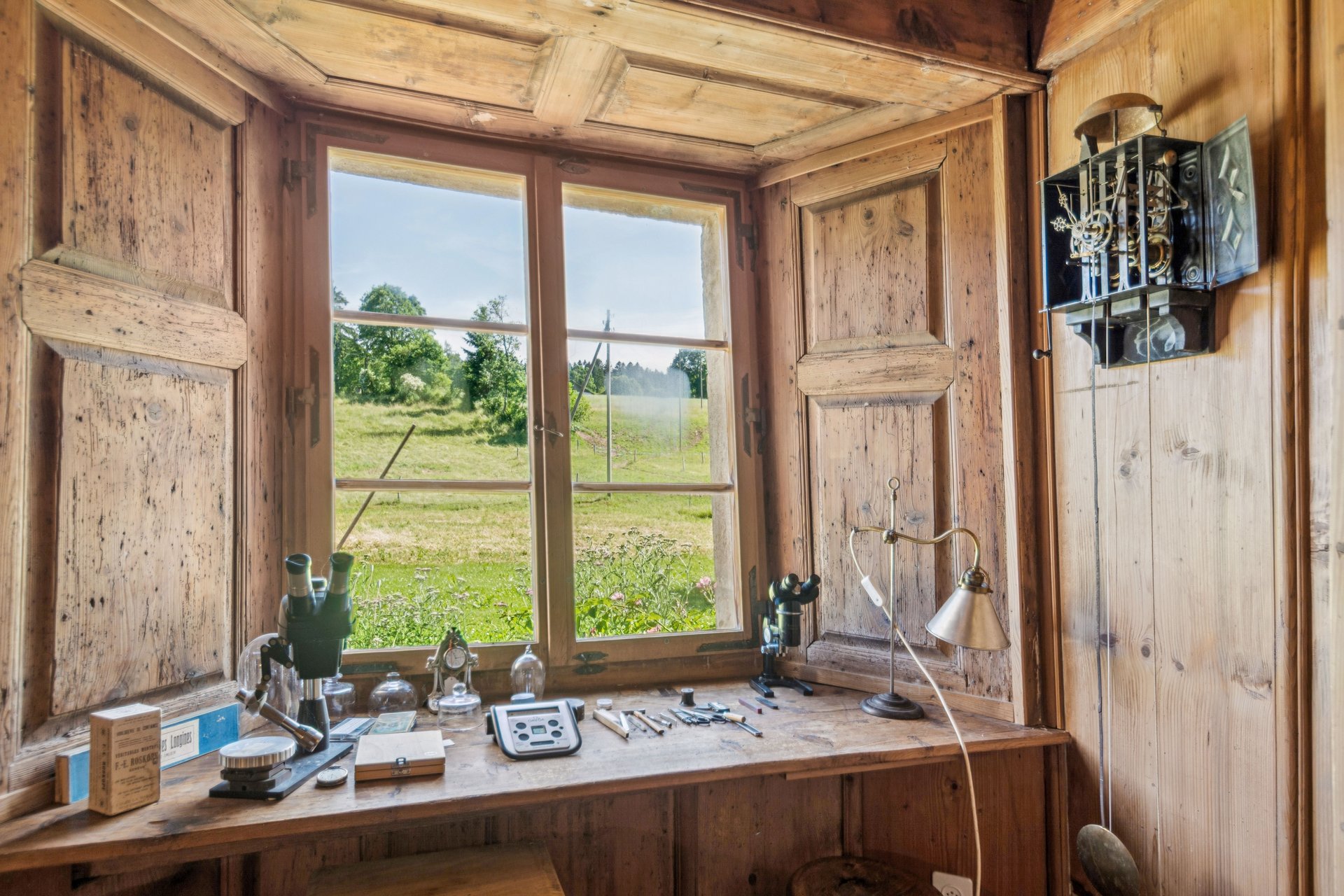
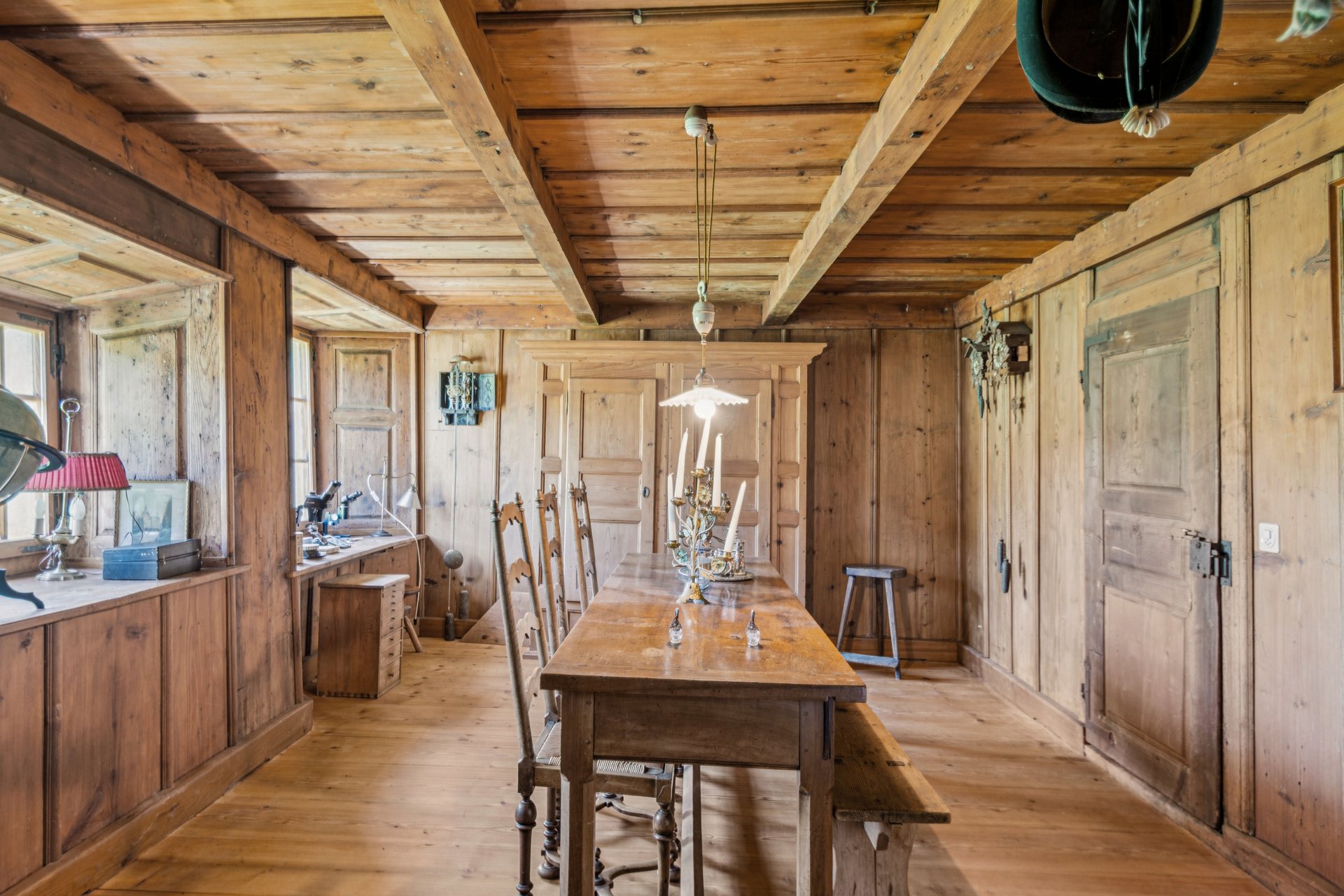
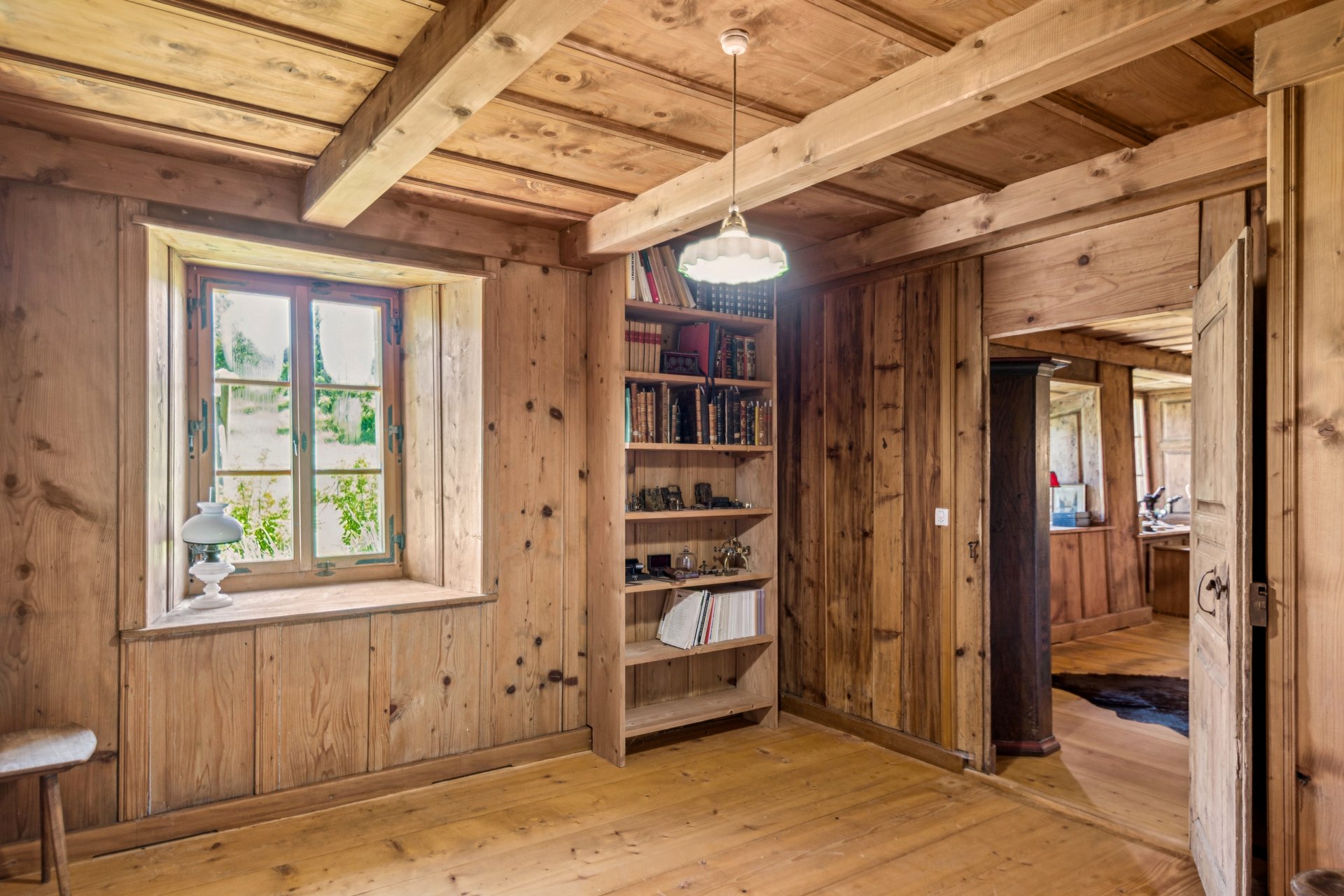
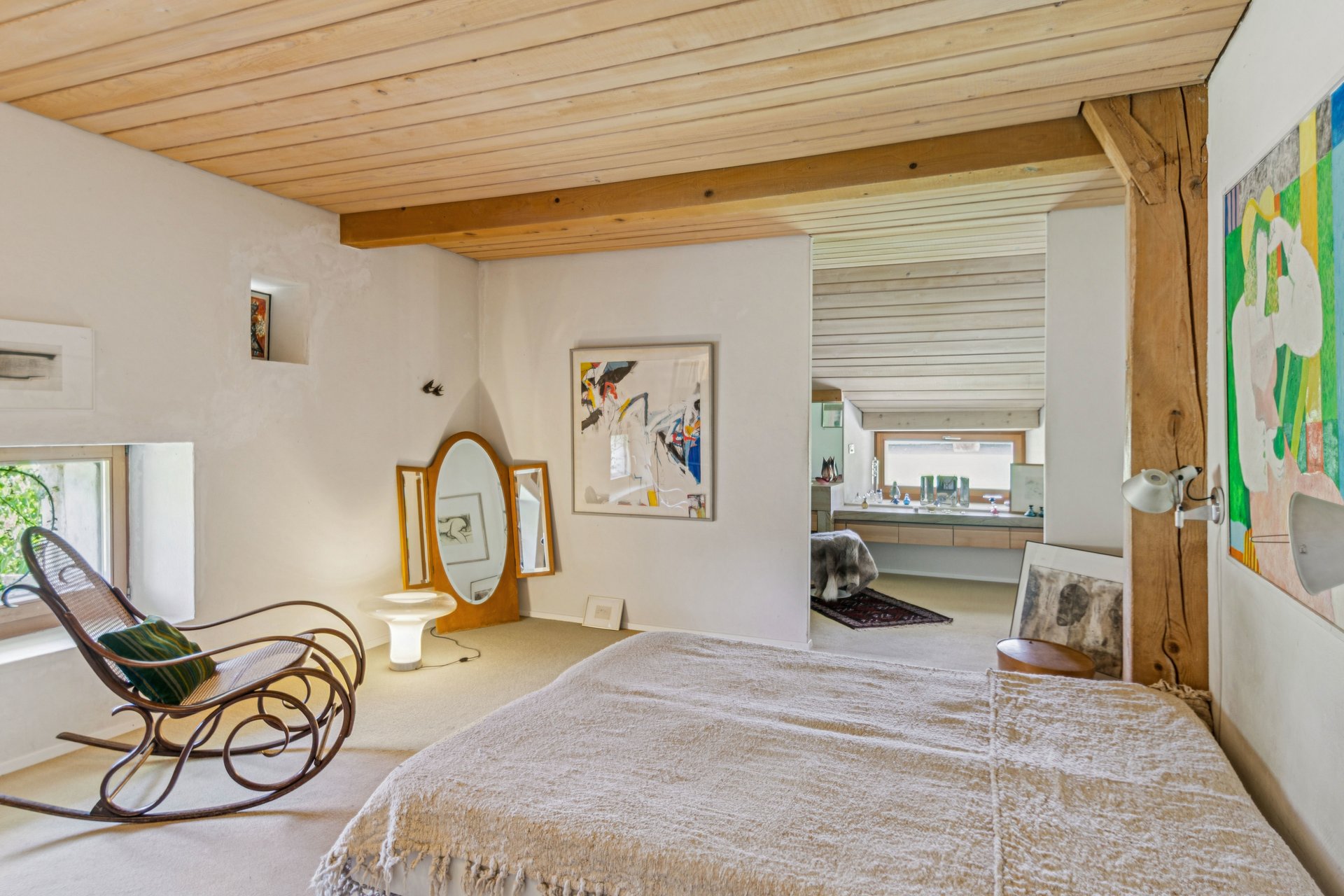
The "belle chambre" has regained its original panelling. A leap of three hundred and fifty years to reach the new bedrooms.
In their heads, the plans are ready down to the smallest detail. But it was the meeting in 1989 with architect François Willemin that would kick-start the second stage.
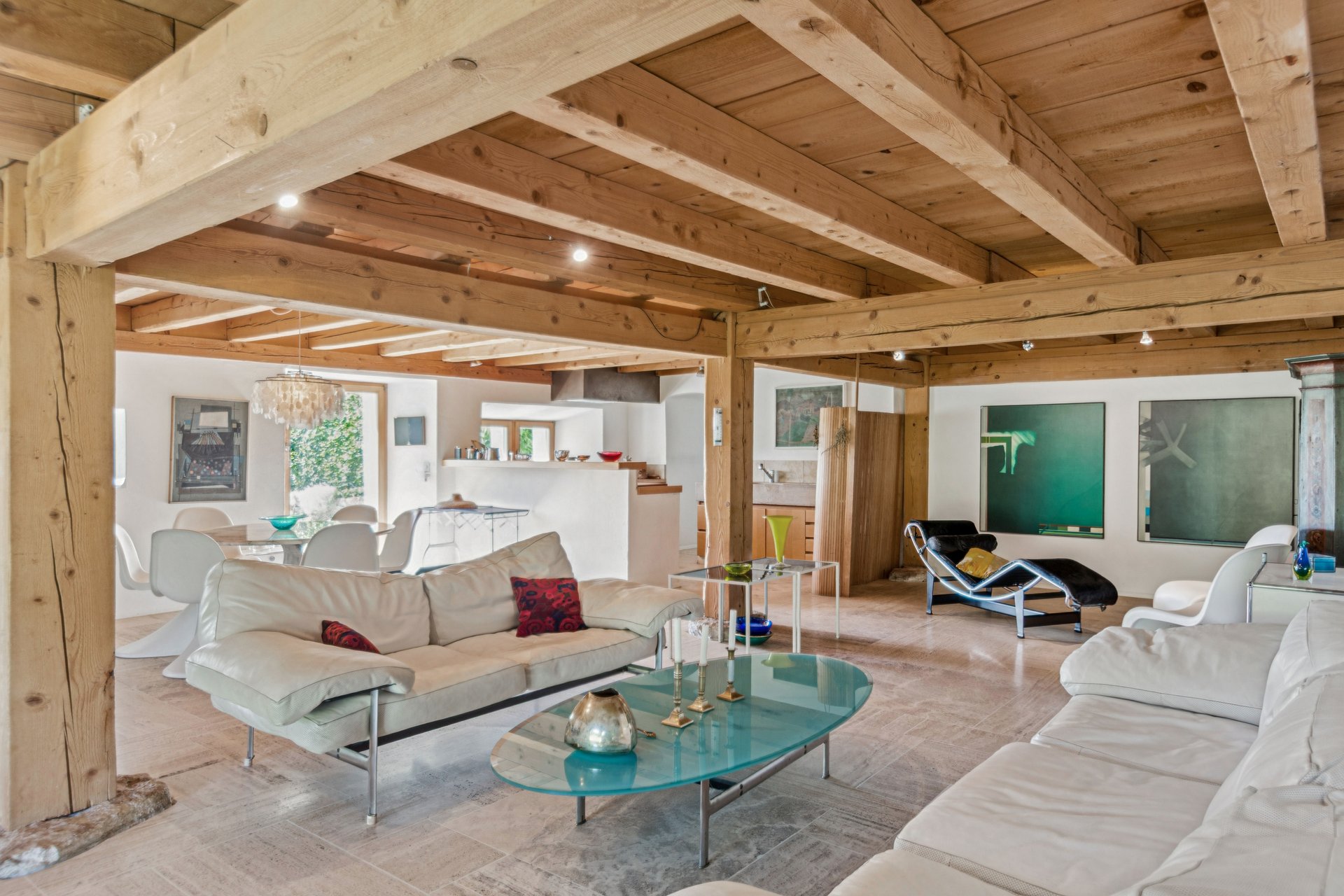
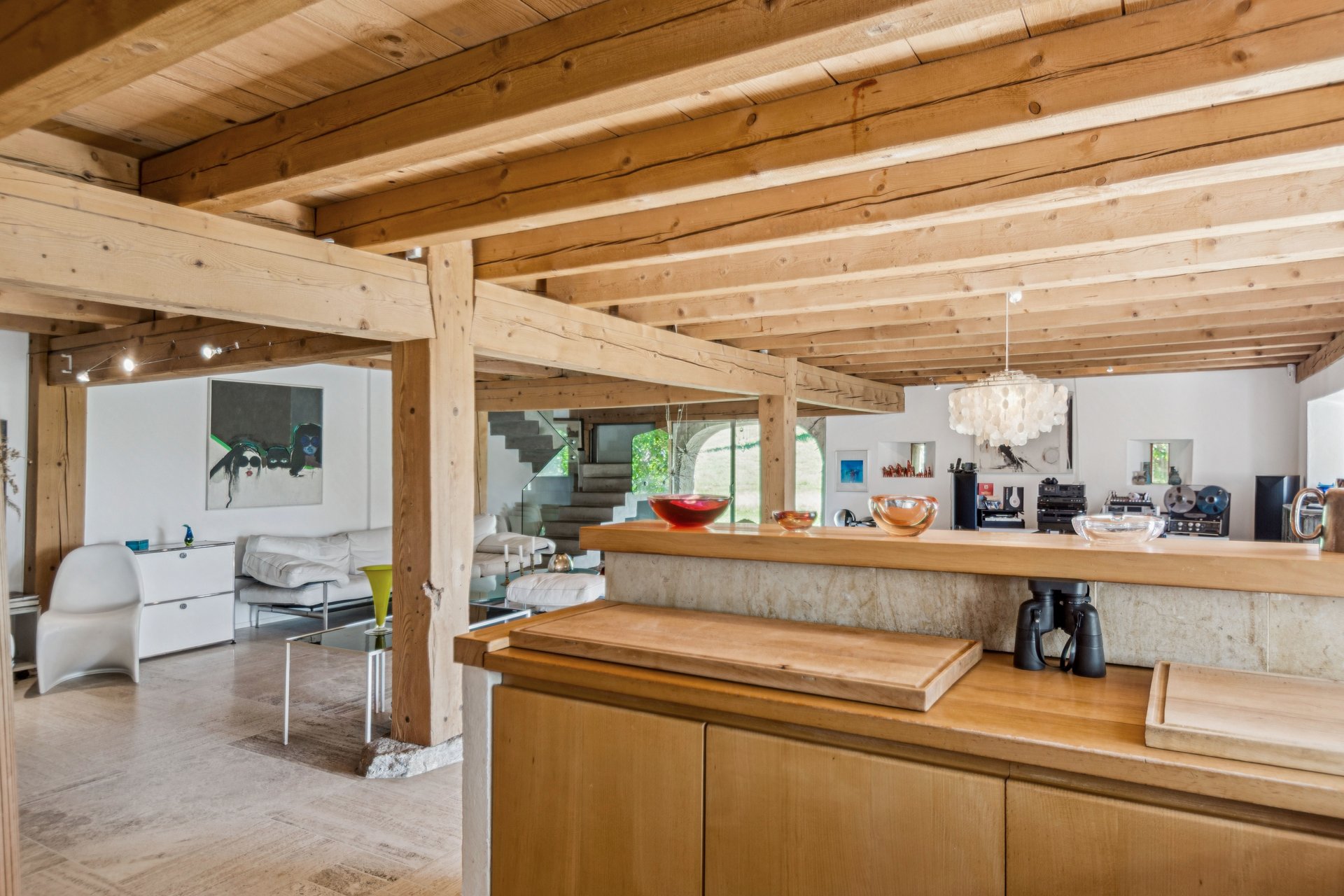
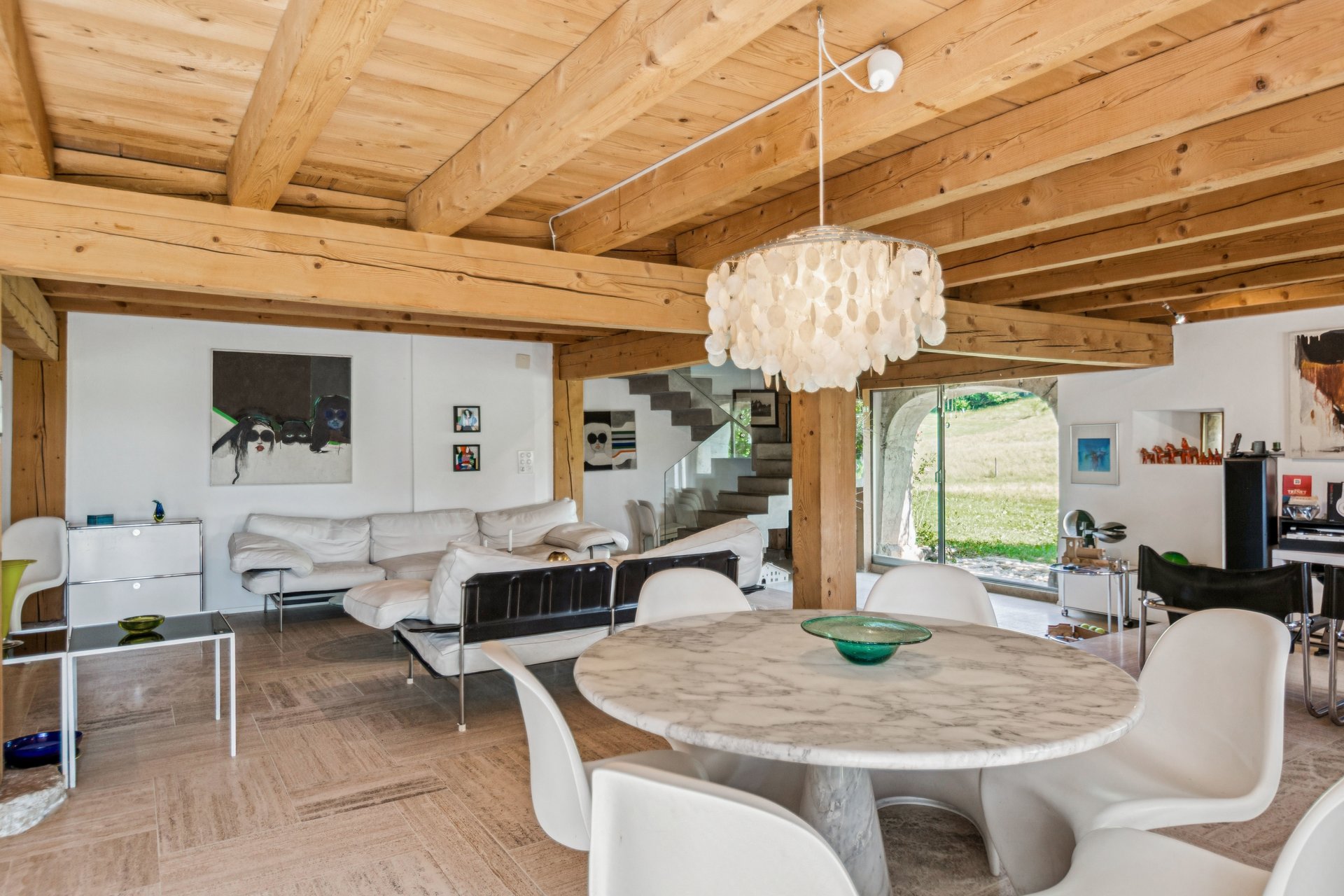
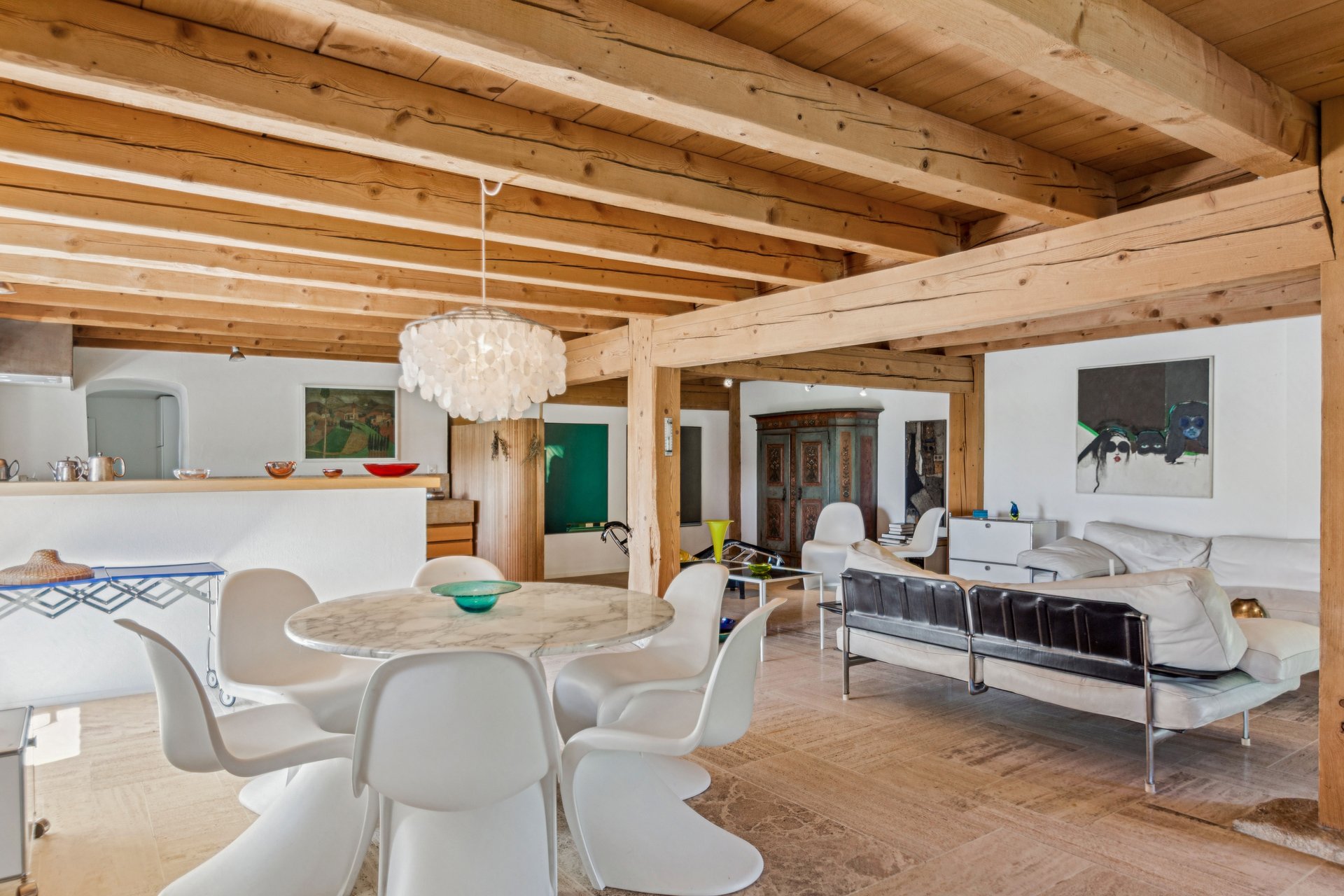
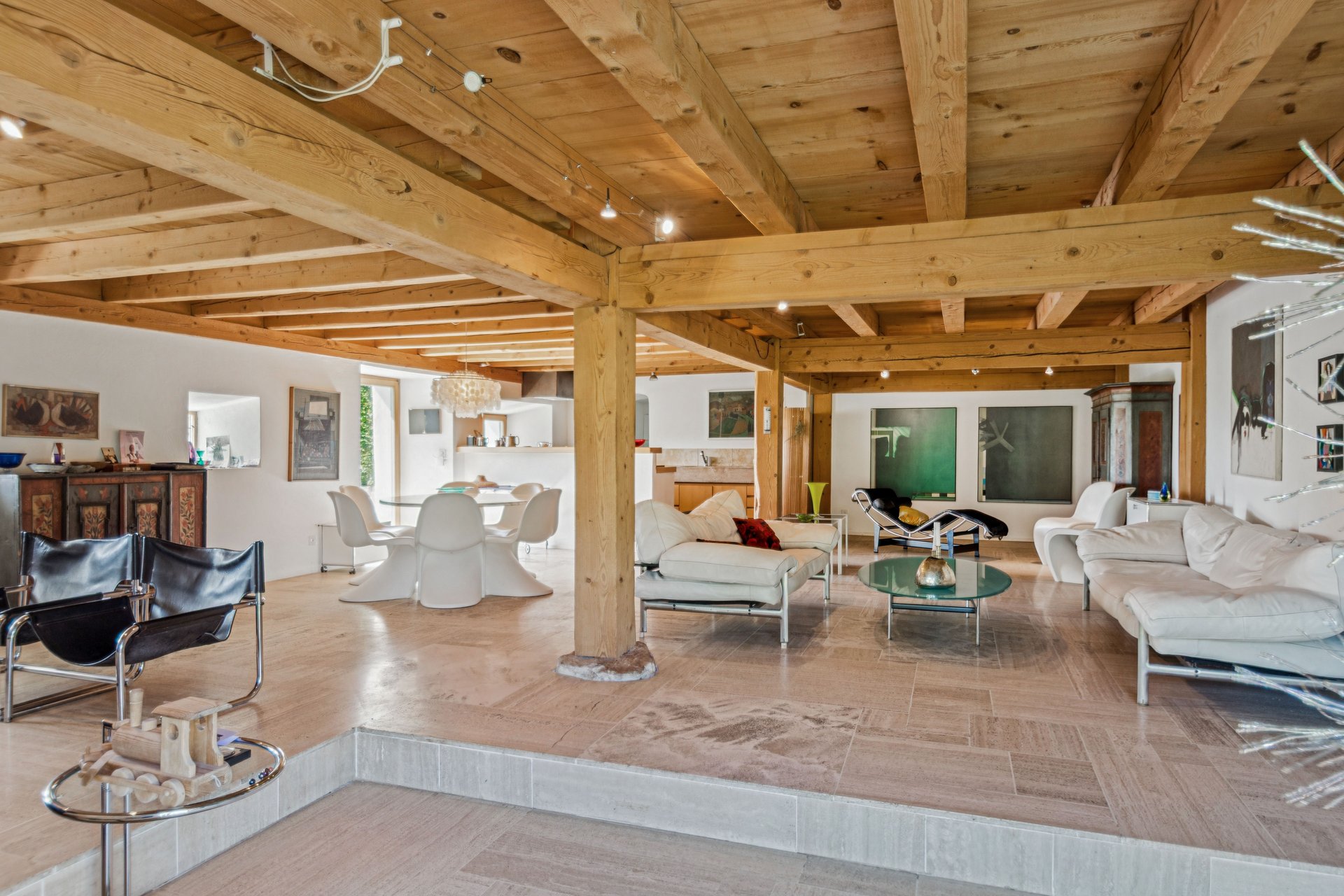
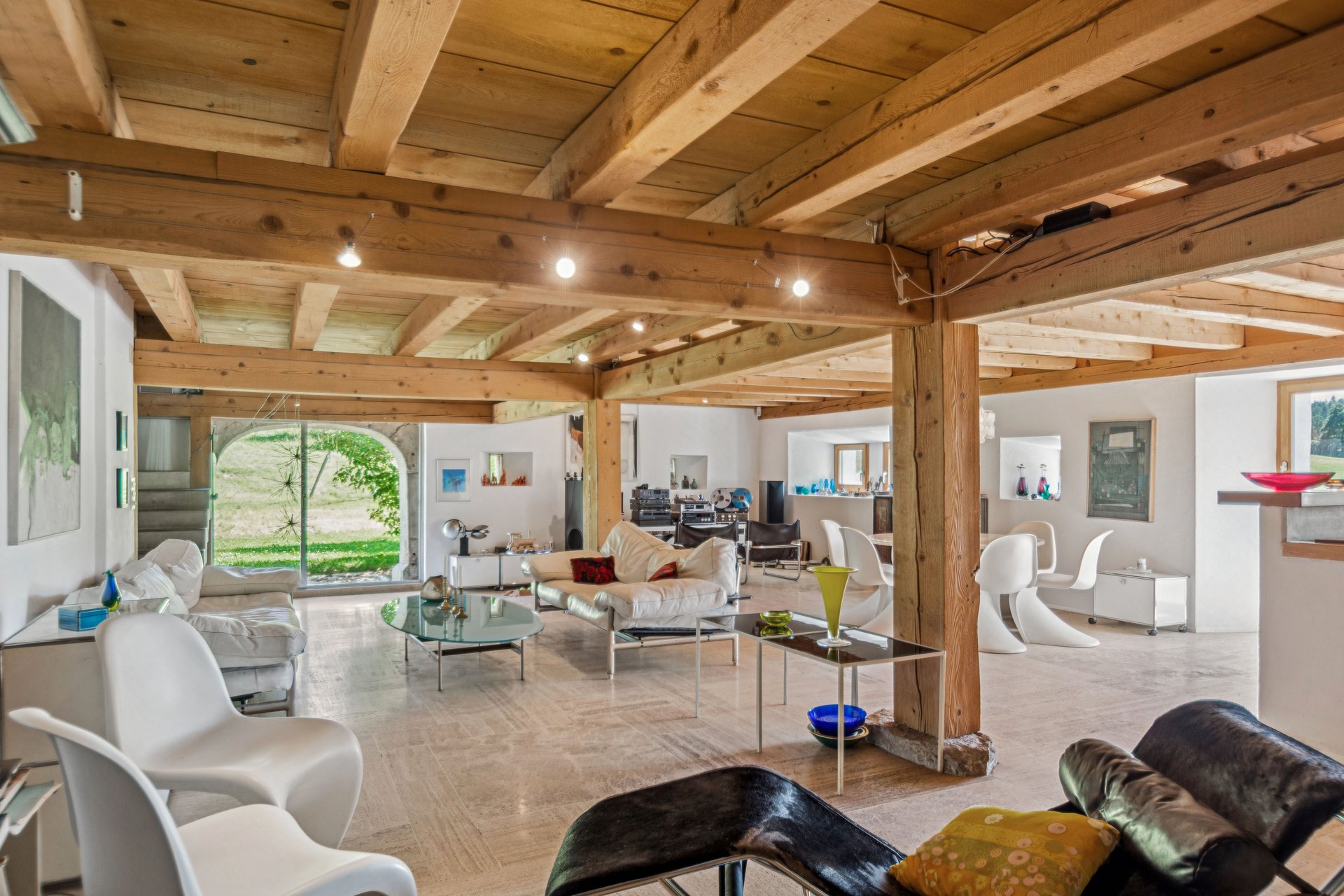
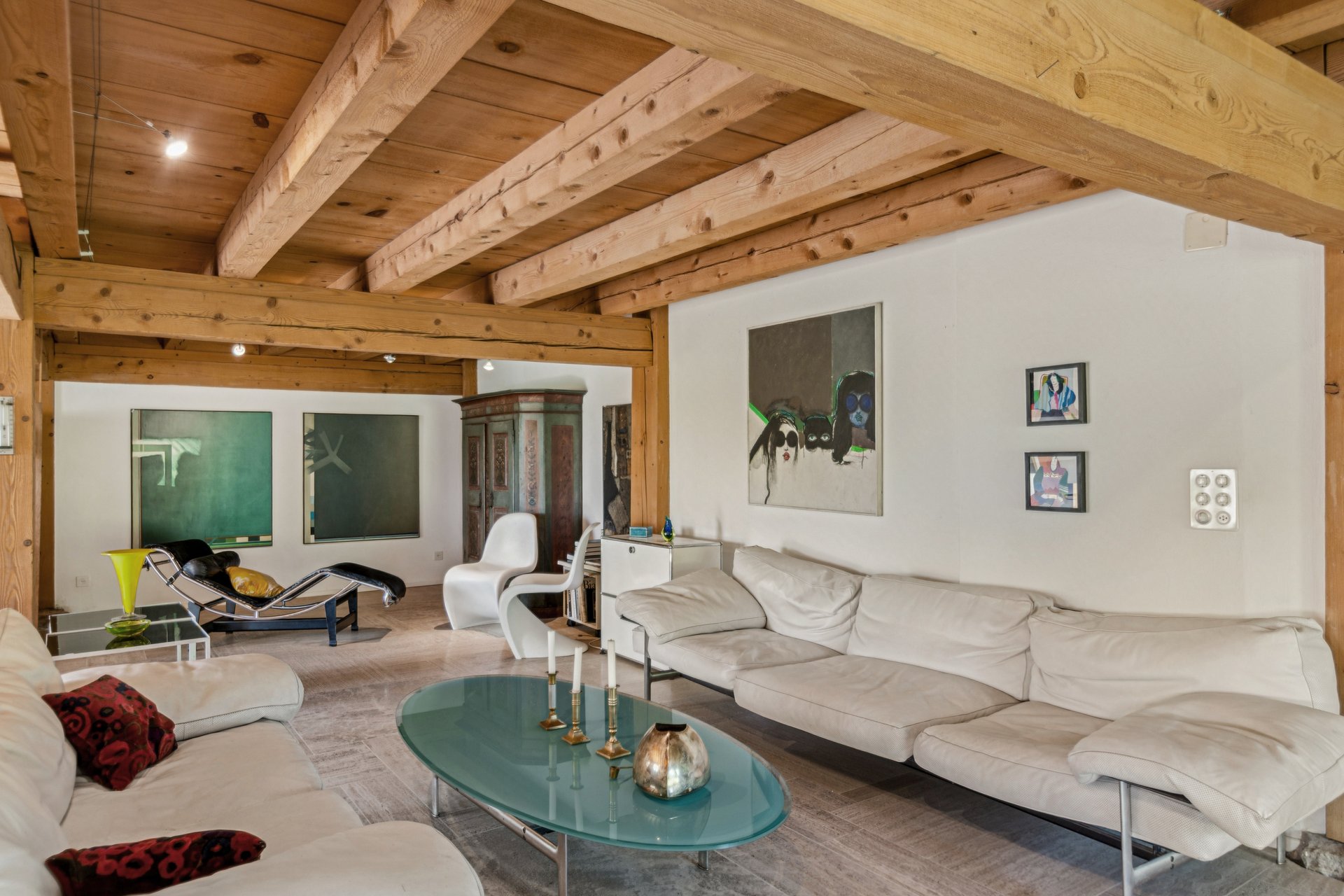
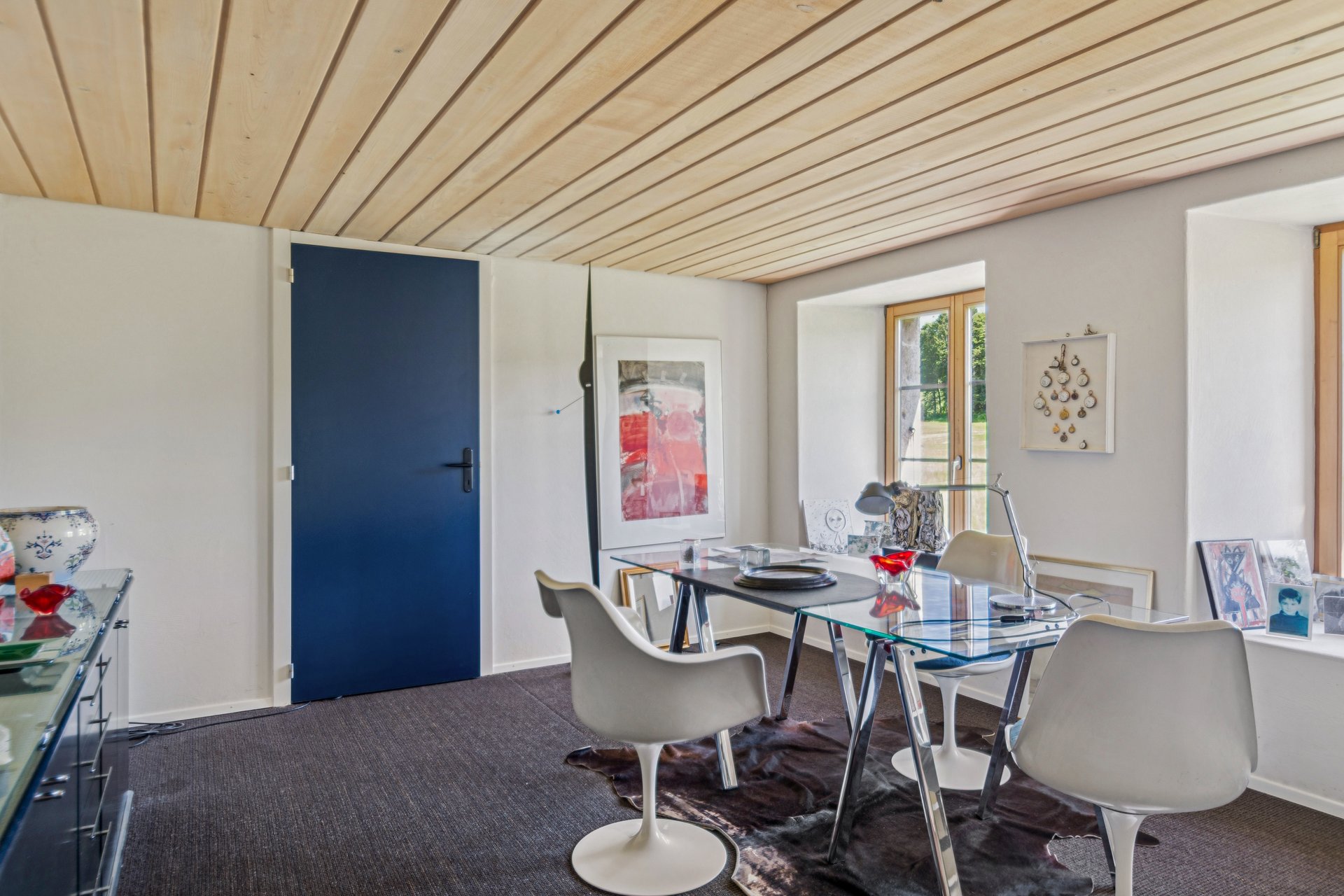
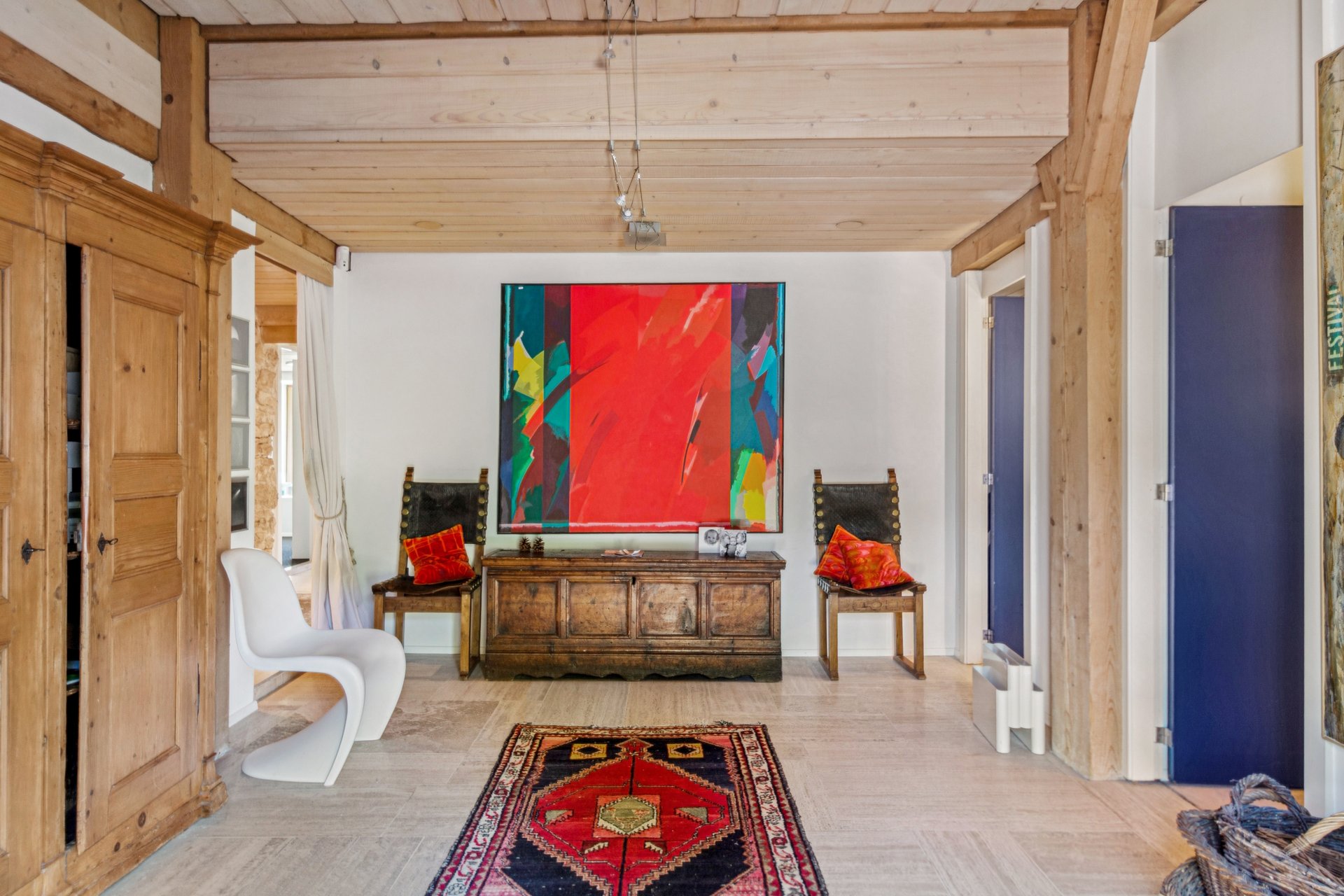
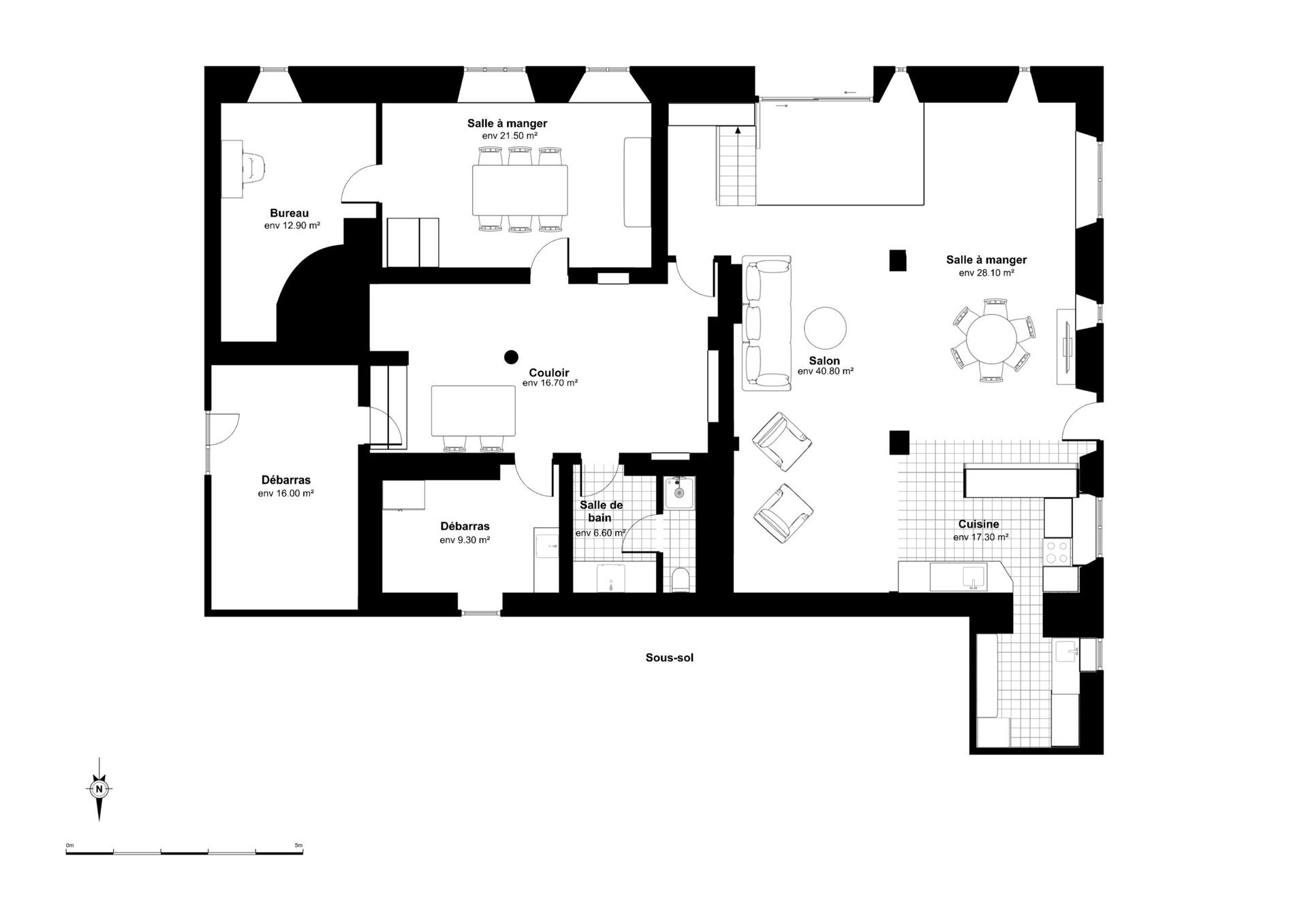
This was also where relations with the Heimatschutz, which had crowned the restoration of the old part in 1985, threatened to turn sour. Although the barn is of no historical interest whatsoever, apart from the façade, which will remain untouched, the Heimatschutz is trying to impose the "faux vieux". Candlelight is out of the question, say the owners, who are as committed to the idea of continuity in evolution as they are to respecting the past. The tiny windows of the former stable have been left untouched, while the large porch that punctuates the façade and which, cleverly glazed, brings light into the room, has been preserved. The interior, on the other hand, will be resolutely contemporary, in the form of an immense living, dining and kitchen area, occupying the entire surface. Blonde wood panelling and white plaster make the transition to designer furniture and paintings by contemporary artists - another passion of the owners. Finally, a deliberately neutral but highly architectural raw concrete staircase provides access to the rooms on the upper floor.
The story has come full circle. The story that began three hundred and fifty years ago can continue, firmly anchored in the hollow of the little valley, for future generations. Some houses have a taste of eternity
Construction
Construction
Summary of the renovation of a Jura farmhouse using traditional watchmaking peasant techniques
Historical and rural context
The farmhouse, built in 1652 in the Val-de-Ruz, bears witness to the history of watchmaking peasants in the Neuchâtel Jura. It remained in the same modest farming family for over a century, maintaining a very simple lifestyle until the 1970s: kitchen with hearth, "belle chambre" reserved for feast days, grandfather's bedroom accessible via a trapdoor, while the barn and stables remained empty.
Buyback and heritage rescue
By the late 1970s, the farmhouse was derelict, threatening ruin. Henri and Paule Schneider bought it in 1979, attracted by the discovery of an intact carved corner column in the kitchen. The purchase of the farmhouse led to the immediate classification of the facade by the Heimatschutz (Swiss heritage protection association), recognizing the architectural value of the site.
Renovation using period techniques
The restoration was designed to be exemplary, respecting original craft techniques:
-
Pinned carpentry: The carpentry was completely redone by a local carpenter, using traditional methods: nail-less joints, using only tenons, mortises and wooden pegs. The rafters were cut from fir trunks, fitted and fixed the old-fashioned way, perpetuating regional know-how1.
-
Tavillon roofing: The 305 m² of roofing was covered with 66 cm wooden shingles (tavillons), in white fir, split by hand, as was done in the 17th century. Wood selection and cutting were carried out in the forest with a local specialist, guaranteeing the authenticity of the material and installation.
-
Stone sink: In the kitchen, the original round stone sink has been restored, as have the doors framed in cut stone, the flagstone floor ("laves"), and the "métras", niches cut into the wall to serve as cupboards, typical of Jura peasant housing1.
-
Restoration of old features: The "belle chambre" has regained its original panelling, the fireplace and its pilaster have been restored, as have the trapdoor leading to the grandfather's bedroom and the bench furnace. Traces of evolution (blocked or enlarged windows, 18th and 19th century additions) have been preserved, enabling the history of the place to be read through its transformations.
Contemporary adaptation and respect for heritage
For the barn-stable part, of no particular historical interest, the interior has been transformed into a vast contemporary living space (living room, kitchen, dining room), while preserving the façade and small original windows. The modern intervention (blond woodwork, white rendering, raw concrete staircase) ensures a harmonious transition between past and present, without pastiche or rupture, in the spirit of a living continuity of heritage.
Conclusion
This renovation, crowned with the Neuchâtel Heimatschutz Prize in 1985, perfectly illustrates the watchmaking peasant approach: respect for local techniques and materials, valorization of the memory of the site, transmission of artisanal know-how and intelligent adaptation to contemporary needs. The restored farmhouse thus embodies the meeting of Jura's rural history and today's architecture, in a fruitful dialogue between tradition and modernity
Distribution
Conveniences
Conveniences
Proximity
- Green
- Mountains
- Fog-free
- Shops/Stores
- Bus stop
- Child-friendly
- Playground
- Public swimming pool
- Tennis centre
- Ski piste
- Ski lift
- Cross-country ski trail
- Hiking trails
- Bike trail
- Museum
- Theatre
- Concert hall
- Religious monuments
- Hospital / Clinic
Outside conveniences
- Garden
- Quiet
- Greenery
- Pizza Oven
Inside conveniences
- Eat-in-kitchen
- Open kitchen
- Guests lavatory
- Separated lavatory
- Dressing
- Pantry
- Cellar
- Wine cellar
- Workshop
- Fireplace
- Double glazing
- Bright/sunny
- With front and rear view
- Natural light
- Penthouse
- Exposed beams
- With character
- Timber frame
- Traditional solid construction
Equipment
- Furnished kitchen
- Fitted kitchen
- Induction cooker
- Oven
- Fridge
- Freezer
- Wine cooler
- Dishwasher
- Washing machine
- Dryer
- Bath
- Shower
- Phone
- Cable/TV
- WiFi
- Internet connection
- Alarm
Floor
- Tiles
- Parquet floor
- Stone
Condition
- As new
Orientation
- South
Exposure
- Optimal
- All day
View
- Nice view
- Clear
- Unobstructed
- Panoramic
- With an open outlook
- Rural
- Forest
- Mountains
- Jura
Style
- Rustic
- Atypical house
- Character house